The Executive has decided to temporarily lift taxes on imported luxury rice. According to official explanations, local rice production is still struggling to meet market demand.
A U-turn. While the Ministry of Economy and Finance had proposed a 20% customs duty and a 5% VAT on imported luxury rice in the supplementary finance law, the executive decided on Wednesday to temporarily suspend these fiscal measures.
Initially presented by authorities as a means to support food self-sufficiency, the taxation of imported luxury rice has collided with the realities of the sector. According to the Ministry of Commerce, “local production cannot yet cover market needs.” Analysts are questioning whether this decision was made without considering the realities on the ground and the recent shocks that have shaken the sector since the beginning of the year.
The ministry stated, “We must bridge the gap to cover the market, especially with the start of the lean season in a month. This is why this decision was taken in the Council of Ministers.”
With the new fiscal measures implemented in the 2026 supplementary finance law, the government reaffirmed its commitment to reducing tax expenditures by 290 billion ariary, in accordance with the conditions of the International Monetary Fund. These taxation measures on imported rice were part of the provisions taken to increase tax revenue.
By ultimately suspending taxes on imported luxury rice to preserve purchasing power and availability, the State finds itself in a budgetary dilemma: on one hand, it maintains the exemption to avoid inflation during the lean season; on the other, this creates an unforeseen shortfall that jeopardizes the goal of recovering or saving the 290 billion ariary required by financial partners.
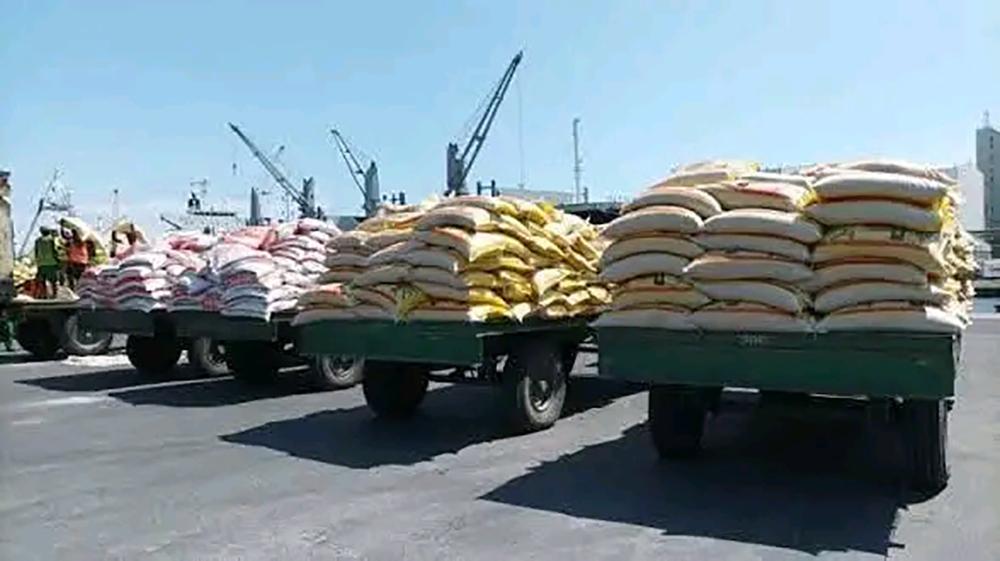
The rice sector has gone through many ups and downs in recent months. Climatic hazards at the beginning of the year, notably cyclones Fytia and Gezani, paralyzed certain producing regions. Rice prices also fell at the beginning of the year due to stock accumulation. Last year, the country imported more than 800,000 tons of rice. This year, with the corrective measures of the supplementary finance law, policymakers hoped to curb rice imports while ensuring availability and price stability. However, in the first half of the year, rice imports had already reached 408,667 tons, according to data from the General Directorate of Customs.
This represents nearly half of last year’s imports. The Ministry of Commerce intends to continue regulating imports to avoid excessive inflows, emphasizes Minister of Commerce Haingotiana Andriamadison. Measures taken since March will remain in force, notably the prior declaration to the Ministry of Commerce by importers to verify quantities.
The ministry assures that “the State’s general policy aims to gradually reduce dependence on imports.” According to the latest consolidated data, total national production is projected at more than 5 million tons for 2026, exceeding the 4.7 million tons of the previous year thanks to agricultural intensification initiatives. While some regions produce significant quantities of paddy, local rice must still overcome numerous constraints before achieving real competitiveness. Poor road infrastructure, speculation, and bidding wars surrounding rice imports continue to weaken local value chains.
Captured & Published at: 2026-08-21 06:08:34 (Madagascar Local Time EAT)
Original Source: https://www.lexpress.mg/2026/08/taxe-sur-le-riz-de-luxe-importe-letat.html