
The “Notes” from Friday, July 10, titled “Rivalries between administration and technical services,” discuss the anti-plague struggle during the 1921-1936 period. This is based on a study by researcher Faranirina V. Esoavelomandroso, titled “From plague as a disease to plague as politics: Merina interpretation of the plague endemic phenomenon in the Central Highlands (1921-1936),” published in the historical journal “Omaly sy Anio” No. 11 (January-June 1980).
The Malagasy people were well aware of the situation. Exploited, they realized that paying the “Indigenous Medical Assistance Tax” (AMI) did not grant them free medical care, nor did it exempt them from contributing materially to their own well-being. According to the historian, this tax, established in 1902 and mandatory for all adult men, largely funded the AMI budget. By 1928, the budget exceeded eighteen million francs, with fifteen million coming solely from this tax. “Ultimately, the civilizing work of the colonizers relied essentially on contributions of all kinds (labor, money, materials) demanded from the natives themselves.”
The worst part was that the administration skillfully avoided direct contact with the population, using local notables and elites to pressure their compatriots. The author notes that official biographies of certain notables “mention, in their list of meritorious actions, the role they played during the plague, which could earn them additional honors or the epidemic medal.”
Furthermore, they were tasked with conducting censuses and collecting information for supplying those in isolation. To do this, they had to enter contaminated neighborhoods and houses, often at great risk. The administration also entrusted them with managing the construction of lazarettos and recruiting the necessary labor. As notables, they faced “other obligations imposed by their rank and the example they had to set,” such as providing support (more or less voluntary) to the sick and their families through donations of food, sleeping mats, and fuel.
For them, as for the ordinary members of the Fokonolona, “the plague meant additional constraints.” Moreover, due to the severity of its appearance and the rigor of the prophylactic measures applied to the Malagasy, the plague revealed the misery and social inequalities of the time. According to Faranirina V. Esoavelomandroso, it illustrated the destitution prevailing in certain neighborhoods of the capital and in the rural world. This severity and rigor provoked “an acute awareness of social inequalities and a questioning not only of health policy, but of the entire colonization process” among the Malagasy.
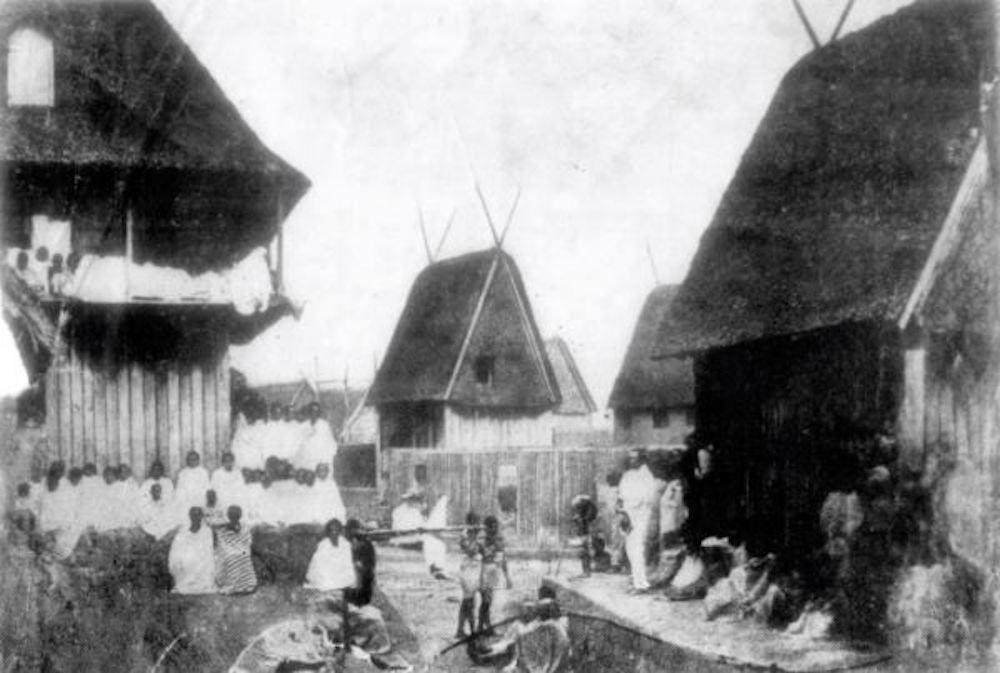
The author explains that officially, “Disease No. 9” (the term for plague in medical reports) struck almost exclusively the Malagasy in the populous neighborhoods of the capital and the villages of Imerina. The 1921 epidemic raised “the problem of the slums” in Antananarivo. However, the solution proposed by some French officials was “to remove those responsible for the scourge, i.e., the natives.” In 1899, in Tamatave, the Commission on Hygiene and Unsanitary Housing decided on “the expulsion of the Malagasy to a safe distance from the city.”
At the end of the July 1921 epidemic in the capital, there were plans for “the removal of natives outside urban perimeters, while facilitating their daily transport to the city for work.” The goal was to eliminate one of the main factors in the spread of epidemics by avoiding intra-urban overcrowding in narrow, unexpandable spaces. In parallel, a general sanitation of the capital, combined with the progressive implementation of a rational urban plan, appeared as a necessary condition to eradicate the plague from the city.
Various suggestions followed this line of thought. In 1925, Dr. Couvy, in his “Organization of the fight against the plague in the commune of Tananarive,” recommended imposing specific construction types for warehouses and private homes (foundations and bases in hard materials), eliminating natural rat habitats, and, above all, adopting a housing policy. This policy advocated for allotting municipal lands (or having the city acquire them), ceding them for free to owners expelled from their unsanitary homes, and obliging them “to build, if necessary with compensation and according to a determined type.” Each house could only shelter a limited number of people. However, a decade later, the problem remained unresolved despite the “great works policy” that marked the interwar period.
Captured & Published at: 2026-07-13 22:04:19 (Madagascar Local Time EAT)
Original Source: https://www.lexpress.mg/2026/07/une-maladie-illustrant-la-misere-dans.html