
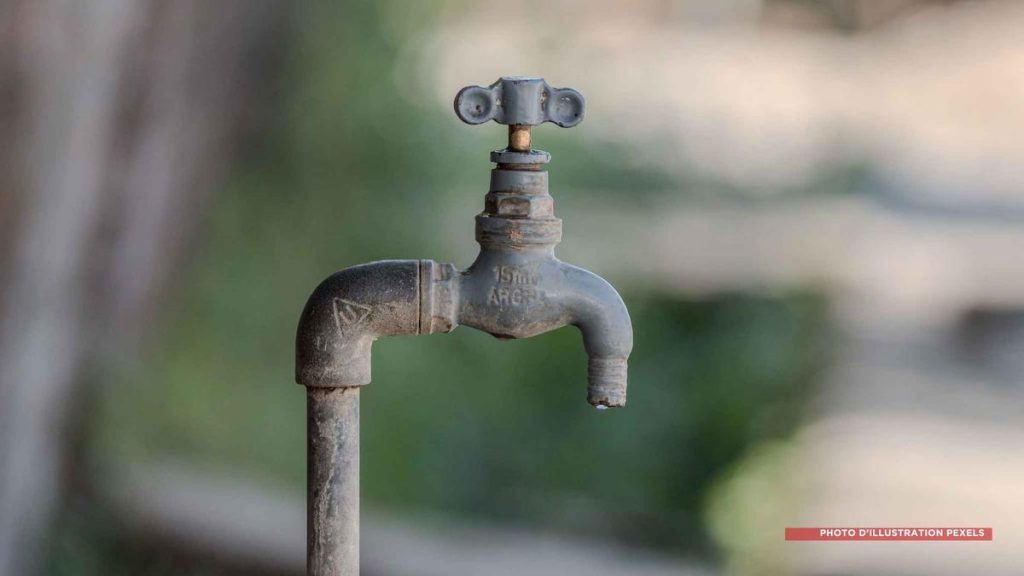
Residents of Moroni, the capital of Comoros, face severe water shortages, with supply sometimes available for only one hour every 15 to 20 days in certain neighborhoods. The city is grappling with a long-term water crisis caused by an aging network, infrastructure unable to keep pace with population growth, and limited electricity supply.
In many areas, residents leave their taps open constantly to ensure they don’t miss the rare moments when water flows. When supply resumes, neighbors alert each other to fill reservoirs and containers. Ben Joma, an 86-year-old retired printer, shared that neighbors call each other to coordinate filling their vessels whenever water arrives.
Many households are forced to purchase water from private distributors. Ben Joma recently paid the equivalent of 25 euros for 1,000 liters, a significant expense in a country where nearly 45% of the 870,000 inhabitants live below the poverty line of roughly 100 euros per month. Consequently, many have turned to water distribution as a business, with tanker trucks and motorcycles queuing for hours at the Vouvouni pumping station.
Even customers of the national water utility, Sonede, are affected. Kaouthara Bouchrane, a mother of four, spends her pre-dawn hours at a public water point, noting that the price of water has risen from 30 to 50 euro cents per container, adding to the financial burden of families.
Sector officials attribute the crisis to the fact that the Vouvouni pumping station, designed in the late 1970s for 35,000 people, now serves a population of nearly 150,000. Additionally, the aging network suffers from significant leaks, with nearly half of the pumped water lost before reaching users. Limited electricity further restricts the station’s operation to about ten hours a day.
To address the crisis, authorities are relying on a 20-million-dollar modernization project funded by the World Bank. Expected to take four years, the project includes new drilling, network renewal, and the construction of two large storage reservoirs. In the meantime, residents continue to endure the shortages, with the poorest waiting in long lines at public points and the wealthier paying high prices for private deliveries.
Captured & Published at: 2026-07-28 17:38:43 (Madagascar Local Time EAT)
Original Source: https://2424.mg/approvisionnement-les-penuries-deau-rythment-le-quotidien-des-habitants-de-moroni-aux-comores/?utm_source=rss&utm_medium=rss&utm_campaign=approvisionnement-les-penuries-deau-rythment-le-quotidien-des-habitants-de-moroni-aux-comores