
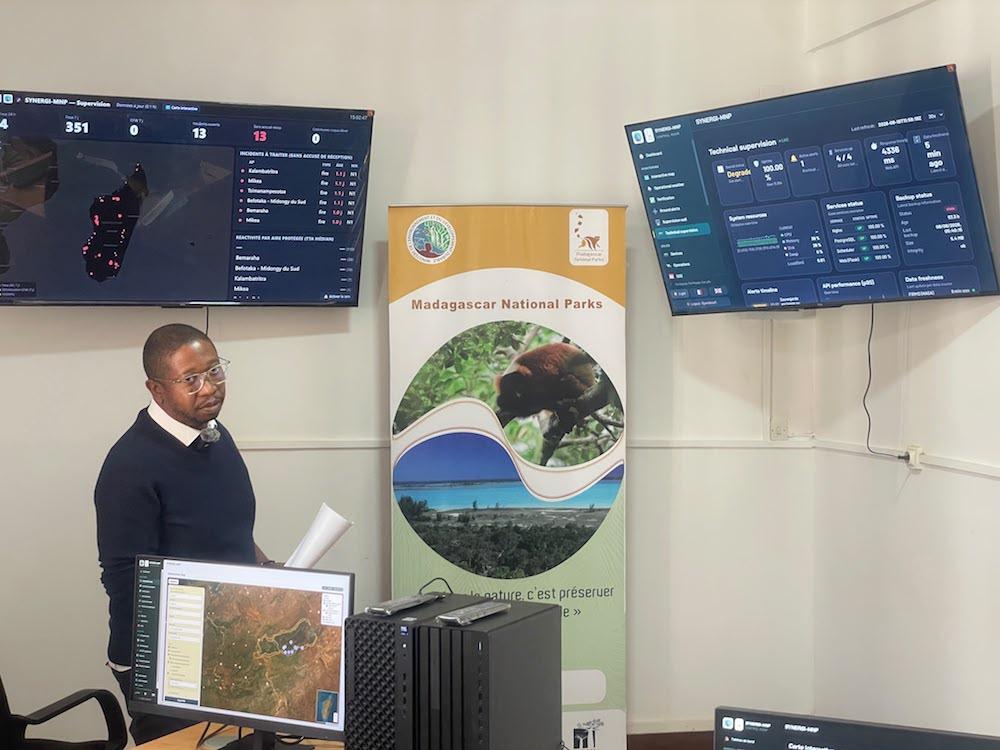
Satellite data and a new monitoring system are enabling better tracking of fires within Protected Areas. The goal is to detect fire outbreaks more quickly and facilitate field interventions.
Fire monitoring in Protected Areas is modernizing. Satellite data now allows for remote detection of fire starts, even in hard-to-reach areas. This information is transmitted to the monitoring system to facilitate analysis and verification by field teams.
At the Madagascar National Parks (MNP) headquarters in Ambatobe, a new Control Room centralizes information related to environmental alerts. Inaugurated on Monday, August 10, it provides a clearer view of the situation across various sites and facilitates coordination with local teams. Satellite alerts primarily serve as signals.
Once detected, these alerts must be analyzed and verified by field agents. Their expertise and knowledge of the territories remain essential to confirm the presence of a fire and assess the situation.
The SYNERGI-MNP system (National Synergy for Optimal Reactivity) strengthens this monitoring chain. It facilitates the reporting and circulation of information between patrol teams, Protected Area managers, and headquarters. The objective is to reduce the time between fire detection and the transmission of information to those responsible for intervention. This approach also helps better target monitoring efforts. Available data can help identify areas requiring special attention and guide teams to the affected sectors.
The system is part of a commitment to strengthen fire prevention and the protection of forest areas. The combination of satellite data, digital tracking, and field observations is intended to enable a faster response to fire outbreaks.
With this new monitoring system, MNP seeks to improve fire tracking in Protected Areas by bridging the gap between technological detection and human intervention on the ground.
Captured & Published at: 2026-08-11 05:54:00 (Madagascar Local Time EAT)
Original Source: https://www.lexpress.mg/2026/08/environnement-les-aires-protegees.html