
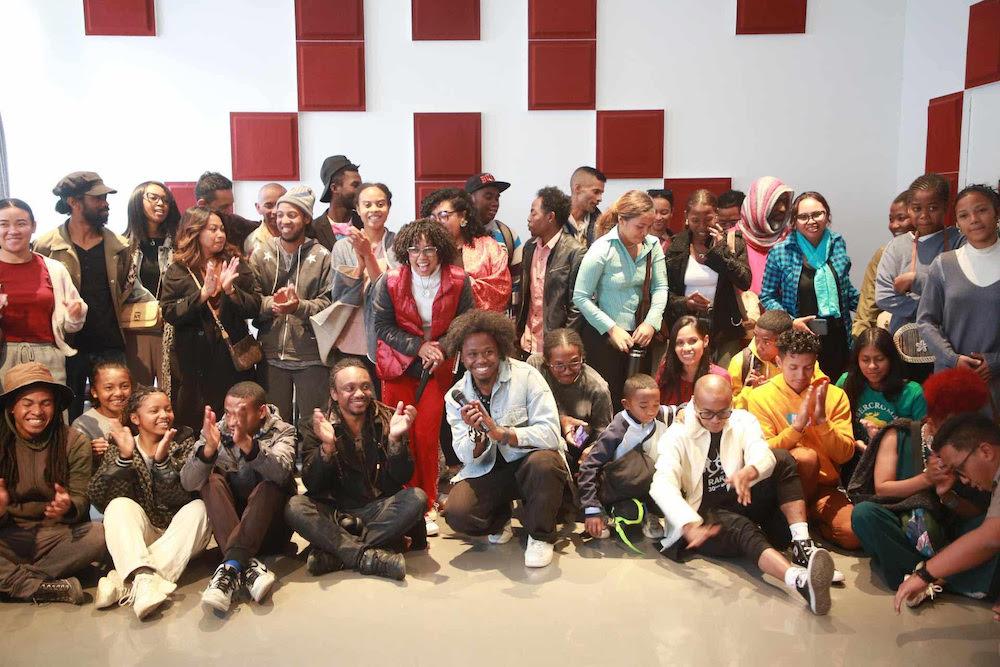
The 7th edition of the 321 Festival, titled “Dihy sy Tantara” (Dance and History), brings together young creators, international artists, and professionals around contemporary dance.
Malagasy contemporary dance is taking on a new dimension with the 7th edition of the 321 Festival, organized by the Rary Company until August 16. Over seven days, 34 performances, workshops, conferences, and art exhibitions are taking place across several cultural venues in the capital, with a single goal: to support choreographic creation and bring this discipline closer to the public.
Created by the Rary Company, the 321 Festival has established itself for over a decade as a platform dedicated to contemporary choreographic creation. Its name refers to the formats supported at its inception—solo, duo, and trio—to which group creations have now been added. This year, the program includes 12 solos, 13 duos, and 6 trios and larger groups, presented by young creators, guest companies, and artists from abroad.
The program also includes workshops for dancers and choreographers, as well as conferences bringing together Malagasy and foreign professionals to discuss the challenges of choreographic creation. Two artistic projects complete the program: the “Dihy Soratra Soradihy” exhibition and the “Fa’Style” installation.
Several international artists are participating in this edition, including Farid Abdoul El Fatah from Comoros, Marie Christabelle Natalia Bayroo and Jerry Kursley from Mauritius, and Gwen Rakotovao from Sweden. Their presence fosters exchanges between the Malagasy, regional, and international choreographic scenes.
Activities are taking place at various locations, including Tahala Raharihasina, Tiers Lieu Maison Mahatazana, Tranompokon’olona Analakely, the Municipal Library, and the Cité des Cultures.
For Ariry Andriamoratsiresy, founder of the Rary Company, “The choice of dance is above all a personal story.” His career has been built around various influences, from Afro-modern dance and jazz to Asian body practices and kinesiology. He is particularly interested in how the body constructs movement, as well as in improvisation and individual creativity.
The theme “Dihy sy Tantara” is part of this approach. It explores personal emotions, lived experiences, and the relationship to history. “History must also be a learning tool,” emphasizes Ariry Andriamoratsiresy, who insists on the need to allow young people to take ownership of their history and culture through choreographic creation.
“Contemporary dance can start from traditional or modern inspirations, but it is built primarily from a personal story that the artist transforms into a stage language,” he explains. However, one of the challenges remains making this discipline more accessible to the public. Long associated with international choreographic meetings and perceived as distant from daily life, it must now find a place with a wider audience, particularly through education and extracurricular initiatives.
For Ariry Andriamoratsiresy, this dynamic also relies on a collective will. It is about bringing artistic creation to life locally, while opening bridges to the outside world and allowing artists to benefit from favorable conditions for their training and creation.
Captured & Published at: 2026-08-11 05:54:11 (Madagascar Local Time EAT)
Original Source: https://www.lexpress.mg/2026/08/art-contemporain-le-festival-321-fait.html