
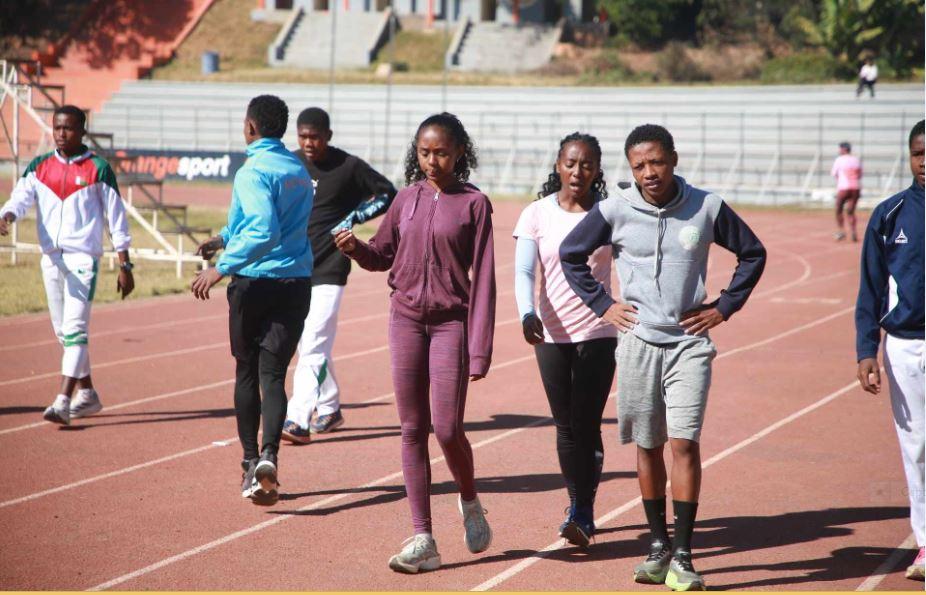
Madagascar lacks a genuine national sports development policy, a shortcoming that hinders talent emergence and compromises the future of the sports movement.
Every time a Malagasy athlete wins a medal, the same observation arises: successes are based on individual sacrifices rather than a structured sports system. Behind the celebrated feats lies a more complex reality: Malagasy sports still evolve without a real roadmap capable of ensuring long-term development.
This lack of strategy is felt at all levels, one year before the 2027 Indian Ocean Island Games (JIOI) in Comoros. Infrastructure remains insufficient, equipment is aging, training centers are rare, and funding is often difficult to mobilize. Participation in international competitions still largely depends on the ability of federations to find ad-hoc solutions, rather than relying on a permanent state support mechanism.
The recent withdrawal of the U20 Makis from the Barthes Trophy, scheduled for August 7-15, 2026, in Kampala, Uganda, due to lack of funding, perfectly illustrates the limits of this system. This absence deprives young players of important international experience and highlights the difficulties faced by several disciplines in preparing for their events.
The lack of a framework also affects high-level athletes. Unlike many countries that have a specific status for their champions, Madagascar does not yet offer a real system guaranteeing medical, social, or professional support. Many must reconcile their sports career, studies, and employment under conditions that limit their progress and may push some talents to seek better opportunities abroad.
The consequences of this lack of policy slow down the professionalization of disciplines, reduce the attractiveness of sports to investors, and make the transition of former athletes difficult.
The issue of professional transition is another weak point of the system. After dedicating several years to defending national colors, many former athletes find themselves without support. The recent death of former Makis player Bienvenu Mananjarasoa has revived the debate, as have the difficult situations experienced by former internationals such as Kira Michel or Désiré Rakotonirina, better known as Dezy Monstre.
To reverse this trend, Madagascar must adopt an ambitious national policy based on clear objectives and sustainable resources. The development of school and university sports must also become an essential pillar. It is through better talent detection from a young age and adapted support that Madagascar will be able to build a true sporting succession.
During the press conference for the launch of the 2026 National School Sports Games (JNSS) in Anosy on Tuesday, the acting Director General of Sports, Harinirina Rajohanesa Brice, announced that “the National Sports Policy is currently being drafted. This document will be finalized soon,” he explained.
Captured & Published at: 2026-08-06 06:08:46 (Madagascar Local Time EAT)
Original Source: https://www.lexpress.mg/2026/08/eclairage-le-developpement-du-sport.html