
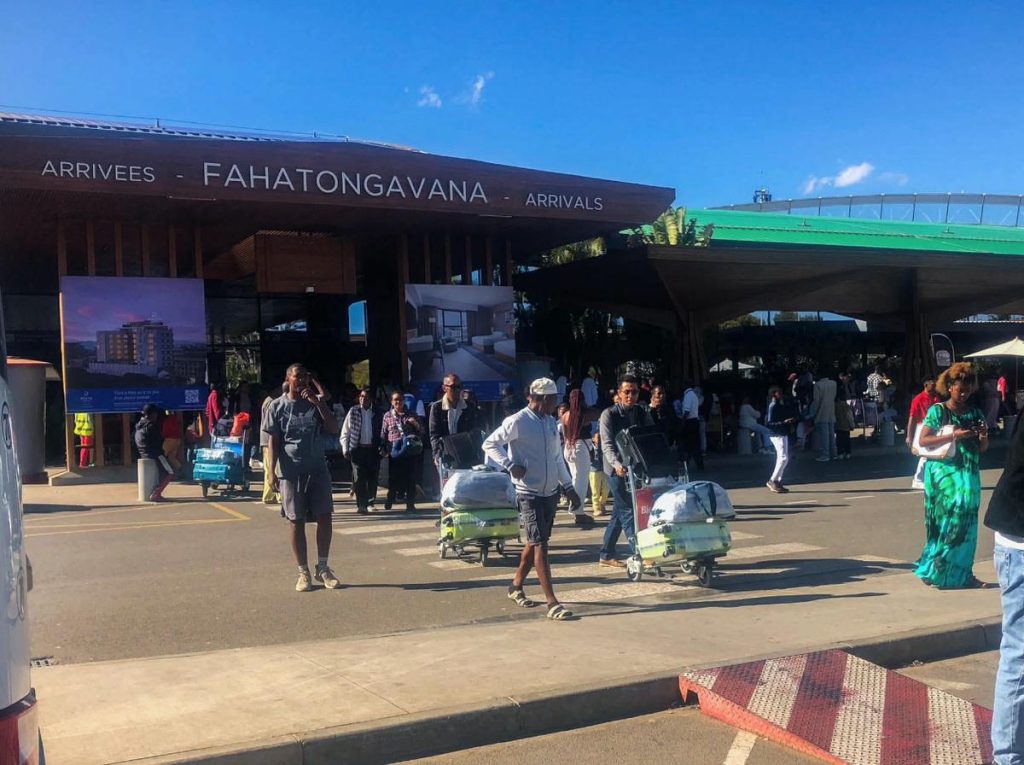
The government is taking proactive steps to prevent the spread of Ebola. During the Council of Ministers meeting on August 4, a verbal communication regarding the strengthening of health control measures at borders was approved.
Madagascar may restrict access to its borders for individuals arriving from Ebola-affected zones. The Prime Minister’s Office is reviewing a draft decision aimed at preventing the introduction and spread of the virus within the country.
“We have proposed banning entry to individuals coming from countries affected by the disease, such as Uganda or the Democratic Republic of Congo, at our entry points. This is one of the measures we are considering because the spread of Ebola causes a massive number of casualties,” stated an official from the Ministry of Public Health yesterday.
The proposal stipulates that if individuals from these countries must enter Madagascar, such as students or UN mission personnel, they will be required to undergo a 21-day isolation period. The quarantine locations have not yet been determined. “An emergency meeting will be organized to designate these isolation sites. They will likely be hotels near airports,” the source added. The proposal also includes a ban on official missions to countries with high Ebola transmission rates.
The government’s absolute priority is preventing the importation of the disease. “It would be dangerous if this disease reached our shores. Take the example of Mpox. It has been circulating here for nearly ten months, yet some people still do not believe in its existence and neglect preventive measures,” lamented another source.
Ebola is highly lethal. In the Democratic Republic of Congo (DRC), where it is spreading at an “unprecedented rate,” the mortality rate is nearly 50%. According to a World Health Organization (WHO) report on August 1, as of July 30, 2026, there were 3,605 confirmed cases, including 1,587 deaths, representing a crude case fatality rate of 44%.
In Madagascar, the spread of the virus, if introduced, could be very rapid due to poor hygiene and overcrowding, particularly in public transport. The virus is transmitted through contact with blood or bodily fluids of an infected person, or through contaminated objects or surfaces. Even after death, bodies remain contagious for several days. However, in Madagascar, funeral customs are deeply significant, to the point where some families have exhumed relatives who died of Covid-19 to rebury them in family tombs.
The Ministry of Public Health claims to be prepared for a potential arrival of the virus. Simulation exercises have already been conducted to test the handling of suspected cases at the airport. However, questions remain regarding the capacity of health facilities, the availability of protective and treatment equipment, and the number of qualified personnel should the virus circulate within the territory. During the Covid-19 period, health structures were severely overwhelmed.
Captured & Published at: 2026-08-06 06:08:33 (Madagascar Local Time EAT)
Original Source: https://www.lexpress.mg/2026/08/sante-eventuelle-fermeture-des.html