
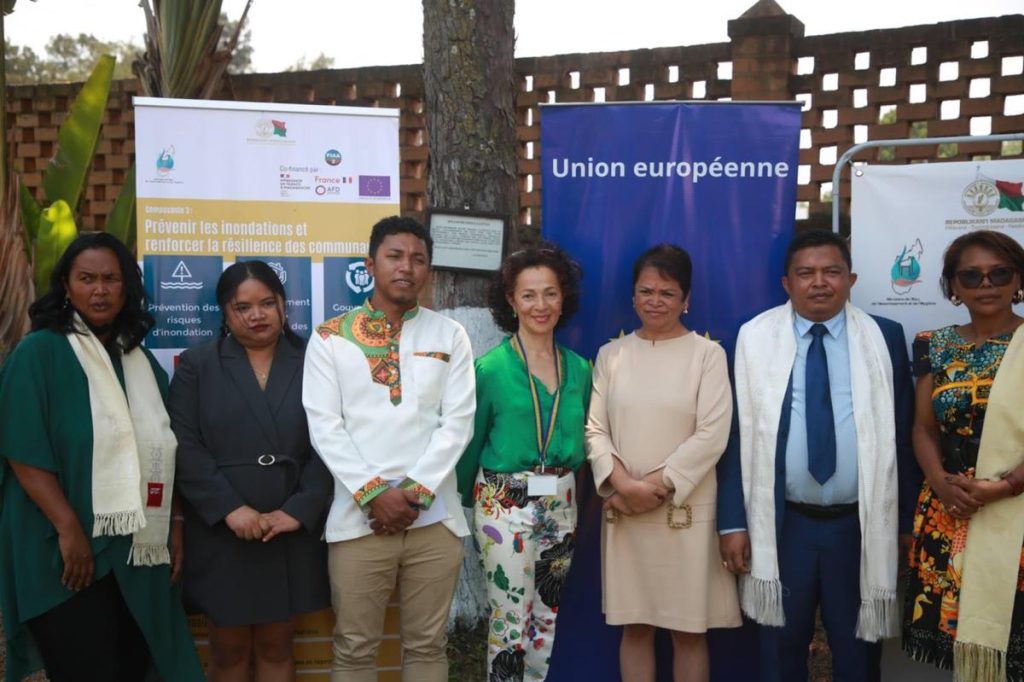
A pilot phase is relying on the participation of residents from fifty-two fokontany to identify sanitation issues and find sustainable solutions against flooding.
The rainy season will serve as the first test for a new flood prevention approach. Launched on October 23 at the Motel Anosy, this initiative focuses on field observations and resident participation to identify sanitation difficulties and define appropriate responses for exposed neighborhoods. Scheduled until 2028, this pilot phase supports drainage works in Analakely-Antanimena, Mahamasina, and the Eastern Valley. Beyond infrastructure, the approach focuses on waste management, maintenance of facilities, and daily practices that influence water flow.
The initial steps consist of conducting diagnostics with residents. The goal is to identify problems encountered in the neighborhoods and gather household needs before determining the actions to be taken. “We are starting from diagnostics carried out in the field with the population. Awareness-raising and various actions will also be conducted with the residents,” explains Riana Andriambolomanana, an urban planning expert at the GRET group. This participation should allow for better targeting of interventions. The accumulation of waste in canals can hinder water drainage, while a lack of maintenance weakens the functioning of sanitation facilities. Raising awareness among local residents is thus among the planned actions, alongside finding solutions adapted to the specificities of each zone.
The objective is to bring technical interventions closer to daily realities. Difficulties are not necessarily the same from one neighborhood to another. The findings collected from residents must therefore serve as a basis for decisions, rather than favoring uniform responses. Launched in 2026, this pilot phase is set to continue until 2028. The current rainy season will allow for observing situations on the ground and better understanding the problems residents face. These observations will then inform the definition of strategies planned for 2027, according to Riana Andriambolomanana.
The approach involves representatives from fifty-two fokontany, with the participation of the Urban Commune of Antananarivo and technical stakeholders. The exchanges are intended to allow local difficulties to be reported and to involve communities in monitoring actions. This component is part of the second phase of the Integrated Sanitation Program for Antananarivo.
The results will depend on translating diagnostics into concrete interventions. Because while drainage works are essential, their effectiveness also relies on the maintenance of facilities and the practices adopted on a daily basis. Future rainy seasons will allow for assessing the relevance of the solutions chosen in the concerned neighborhoods.
Captured & Published at: 2026-10-24 05:54:06 (Madagascar Local Time EAT)
Original Source: https://www.lexpress.mg/2026/10/assainissement-les-zones-inondables.html