
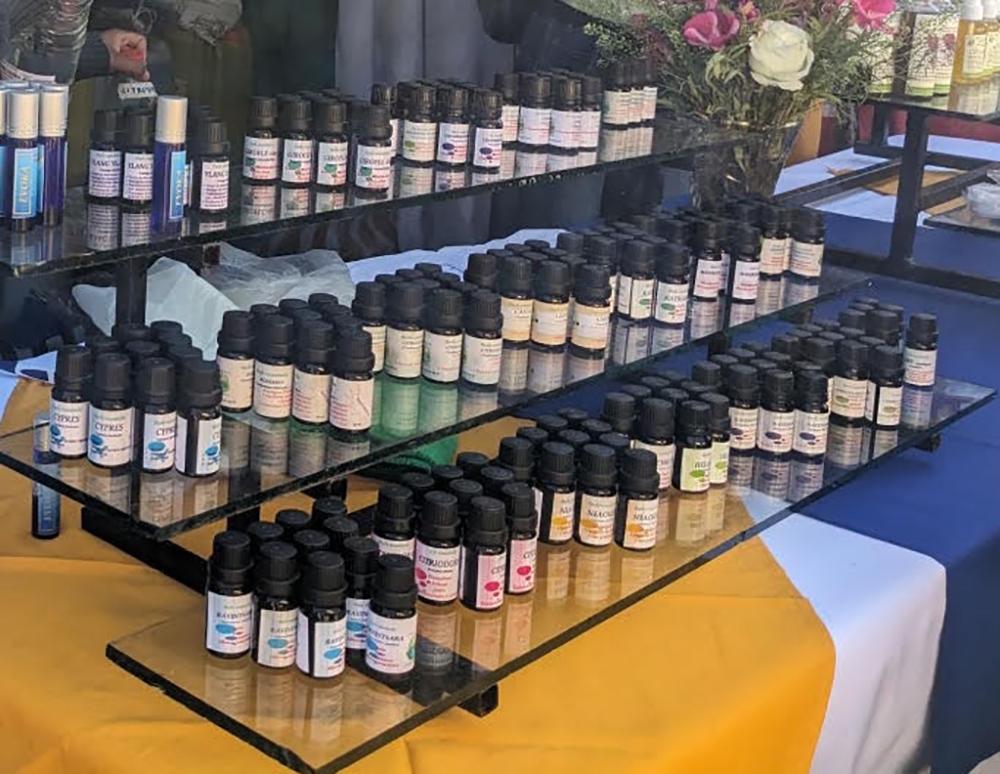
A few drops are enough to concentrate the properties of plants. Essential oils are increasingly popular for their wellness-related uses.
Relaxation, well-being, and comfort are among the primary uses sought from essential oils. Extracted from aromatic plants, they are notably used in aromatherapy to leverage the natural properties of vegetation. Ginger, ravintsara, eucalyptus, and other species each possess unique characteristics. However, their use must be adapted to the specific properties of each oil.
These oils are produced in the rural areas of Antsirabe, Farafangana, Manakara, and the Southeast, which are among the regions where plants are processed. Each producer develops their own specialty and methods. “Every producer has their own way of doing things and thus obtains a yield unique to them,” explains Auguste Rajaofetra, manager and owner of Bioplante Madagascar.
Ginger illustrates this diversity. The quantity of raw material required can be significant: up to 1,000 kg of ginger may sometimes be needed to obtain just 1 to 2 liters of essential oil. The yield depends notably on the raw material and the production method.
This low quantity contributes to the product’s value. The price varies according to the producers, quality, and the process used, and can reach several million ariary per liter. Essential oils derived from organic farming can also be sold at a higher price than conventional products.
Beyond their sought-after wellness benefits, these oils allow local plants to be transformed into derivative products with higher added value. The participatory guarantee system also helps to strengthen trust regarding production practices.
From plants grown in the countryside to finished products, essential oils thus give new value to local resources. A few drops concentrate expertise, raw materials, and economic potential all at once.
Captured & Published at: 2026-08-10 06:39:10 (Madagascar Local Time EAT)
Original Source: https://www.lexpress.mg/2026/08/transformation-les-huiles-essentielles.html