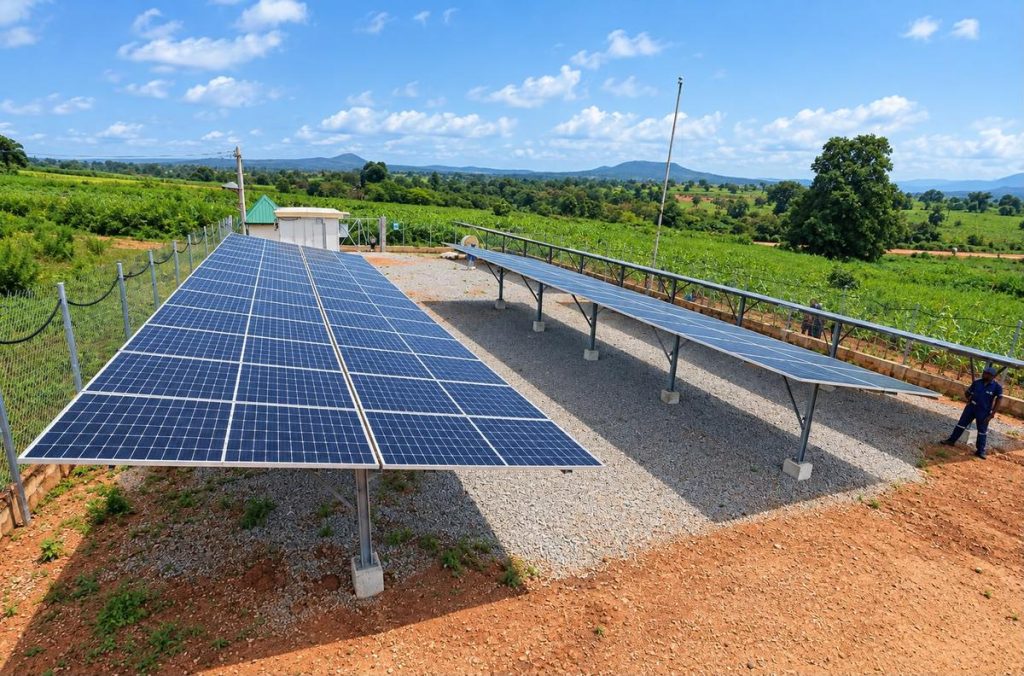
Nearly a thousand customers could gradually gain access to solar electricity in 26 localities in southern Madagascar, thanks to a nanogrid project led by Metaplasco. This initiative aims to generate electricity as close as possible to rural populations to support small economic activities and improve living conditions.
In areas far from conventional electrical infrastructure, the lack of energy access hinders economic development. The high costs of grid extension and logistical difficulties complicate the connection of many communities. Faced with these constraints, solar nanogrids offer a decentralized solution, allowing electricity to be produced near the users.
The Metaplasco project plans to deploy solar installations in 26 localities spread across the communes of Ambatry, Basibasy, Antongo, Ejeda, and Soamanonga. These infrastructures will be sized according to local needs and can evolve progressively based on usage and electricity demand.
This approach makes it possible to envision the electrification of territories where extending the conventional grid would require significant investment and considerable time. Nanogrids thus constitute an alternative for improving electricity supply for isolated communities.
“Our ambition is to provide solutions that truly correspond to the territories in which we operate. Energy must be able to support the development of communities and evolve with their needs,” explains Irfane Alimamod, General Manager of Metaplasco.
Beyond access to electricity, the project opens up economic prospects for the inhabitants. More reliable power could allow merchants to better preserve certain products, use new equipment, and extend their opening hours, depending on the capacity of the installations.
Artisans could also improve their working conditions through the use of power tools. In the agricultural sector, energy could support processing and product preservation activities. These uses would likely diversify income sources and stimulate the local economy.
Access to electricity could also facilitate the operation of certain services and improve the daily lives of households. However, the impact will depend on the cost of the service, its availability, and the ability of the inhabitants to integrate this energy into their activities.
The deployment of nanogrids in these 26 localities presents several operational challenges. The transport of equipment, access to sites, and maintenance of the installations will be decisive in ensuring the continuity of supply.
The sustainability of the project will also depend on its ability to respond to the changing needs of users. The long-term proper functioning of the installations will be essential to allow households, artisans, and small entrepreneurs to take full advantage of the electricity.
Captured & Published at: 2026-10-14 06:09:08 (Madagascar Local Time EAT)
Original Source: https://www.lexpress.mg/2026/10/electrification-rurale-le-solaire-pour.html