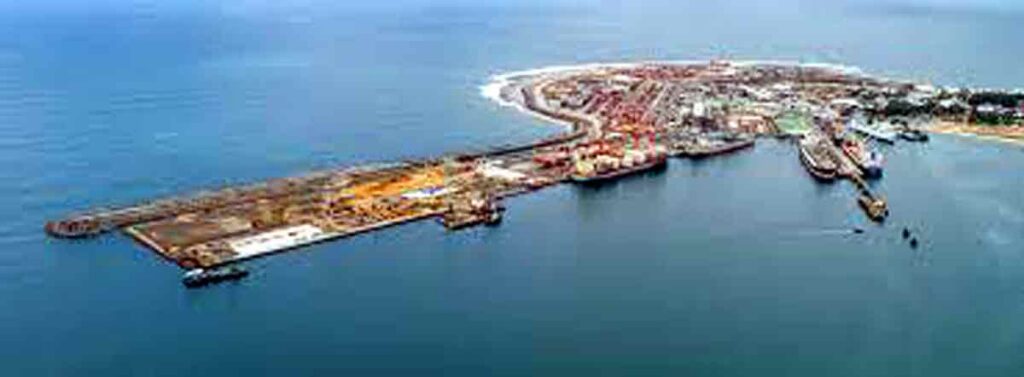
For several years, the Toamasina port terminal has been congested. Empty containers have been accumulating, leading to significant losses due to these logistical inconveniences.
This is an undeniable operational reality. According to recent data, the Toamasina port recorded over 95,000 empty containers in stock in 2025. This static mass obstructs the terminal and slows down destocking operations. According to data provided by the Autonomous Port of Toamasina (SPAT), 280 to 350 trucks travel daily along the logistics corridor connecting the port city to the rest of the country. These are significant volumes, and according to estimates, this daily movement of heavy transporters supplies many regions with vital goods.
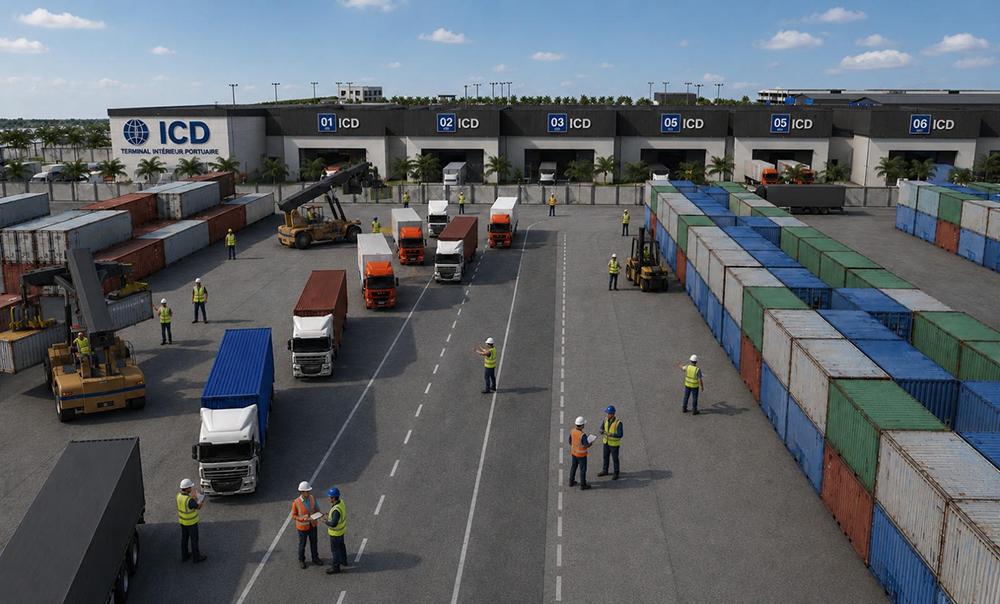
To address this problem, the port company aims to establish an Inland Container Depot (ICD). This dry port will be capable of holding large volumes of containers, thereby decongesting the port terminal. “This will streamline logistics operations for the port of Toamasina,” it is stated. In a press release, the SPAT adds that this new dry port will be the land extension of the Toamasina port. “One of the main objectives of the ICD is to serve as a pressure relief valve for the main terminal. The large volume of empty containers currently occupies spaces that could be better dedicated to operations. It is, among other things, about decongesting the port terminal directly linked to ships and cargo,” it explains.
Some countries like Kenya, India, and Spain have developed ICDs precisely to decongest their port terminals. According to data provided by specialized sites like Terminal Industries, in countries that have implemented such infrastructure, ship waiting times at the quay can be reduced by 30% to 50% because containers are directly evacuated inland. Some marginal costs also decrease. There are fewer penalty fees for importers thanks to cheaper storage inland compared to saturated port zones. Furthermore, the creation of dry ports generates jobs in the logistics sector and promotes the emergence of industrial zones around these infrastructures. However, this solution has certain flaws observed by logistics specialists. Installing a dry port does not guarantee success: several countries face chronic inefficiencies. Unloading a container from a ship, putting it on a train, unloading it at an ICD, and then loading it onto a truck multiplies handling. If the distance between the port and the ICD is too short, these handling costs cancel out the financial advantage of mass transport.
In some West African or South Asian countries, ICDs were created without functional rail links. Moving thousands of containers by truck to an ICD only shifts the congestion from the seaport to the interior. Furthermore, in some countries, institutions have noted that if the ICD customs services are not digitized or suffer from corruption, the dry port becomes a saturated storage area (a “congestion port”) rather than a fluid transit center. Nevertheless, the promoters of the Toamasina dry port project intend to embrace the situation in its entirety. “Beyond responding to current constraints, the project prepares the port of Toamasina for the future evolution of traffic. The development of port infrastructure must indeed be accompanied by sufficient logistical capacities to absorb the increase in flows without increasing pressure on the terminal and road axes,” it is indicated.
Captured & Published at: 2026-08-17 05:54:02 (Madagascar Local Time EAT)
Original Source: https://www.lexpress.mg/2026/08/toamasina-dimportants-lots-de.html