
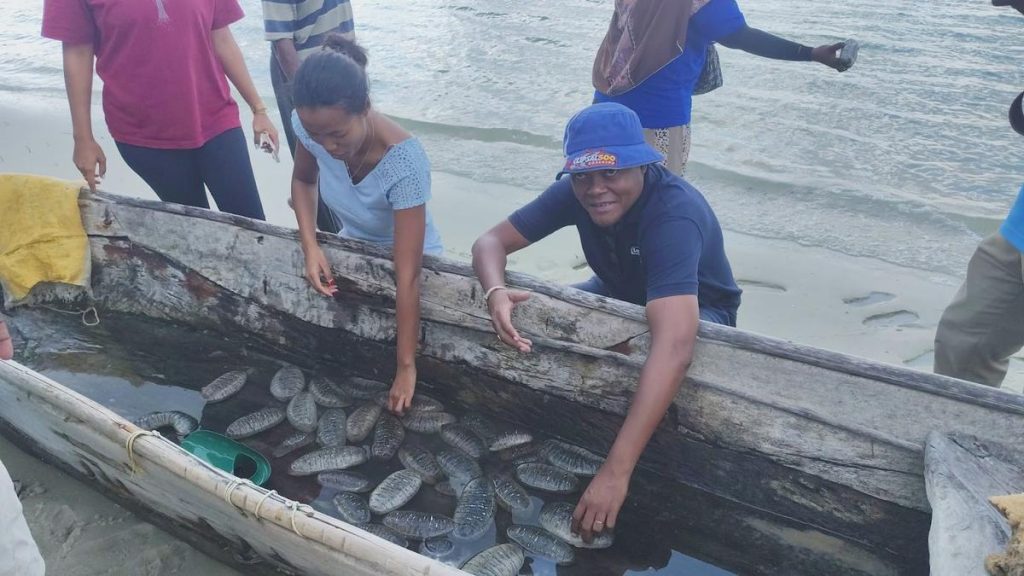
A delegation from the Diana region traveled to Tanzania to draw inspiration from best practices in community-based and sustainable natural resource management.
Faced with growing challenges in preserving natural resources, the Diana region is taking a new step forward. Fifteen environmental stakeholders, including representatives from local authorities, the ReSea project (Seascapes for People, Climate and Nature), decentralized technical services, community-based organizations (VOI), and non-governmental organizations (NGOs), participated in an immersion mission in Tanzania to learn from proven models of community management and sustainable development.
According to the Malagasy delegation, this exchange mission helped identify several best practices that could be adapted to the Malagasy context, specifically for the Diana region. The goal was to foster the sharing of experiences with Tanzanian community organizations and various stakeholders involved in conservation, while contributing to improving the livelihoods of local communities.
The delegation began its mission in Pemba (Zanzibar) to explore best practices in marine resource management and the blue economy. They observed successful initiatives combining sustainable marine resource management—such as seaweed farming, fish farming, and crab breeding—with the conservation and restoration of mangroves, reefs, and seagrass beds.
The mission highlighted the effectiveness of community governance, the strong leadership of women (who represent nearly 80% of active members), and a legal framework that grants local communities significant autonomy. Jean Claude Velomanana, a member of the delegation, noted that governance based on empowered communities, supported by an adapted legal framework and strong female involvement, is a cornerstone of a sustainable blue economy.
Captured & Published at: 2026-07-28 05:53:33 (Madagascar Local Time EAT)
Original Source: https://www.lexpress.mg/2026/07/gestion-des-ressources-naturelles-la.html