
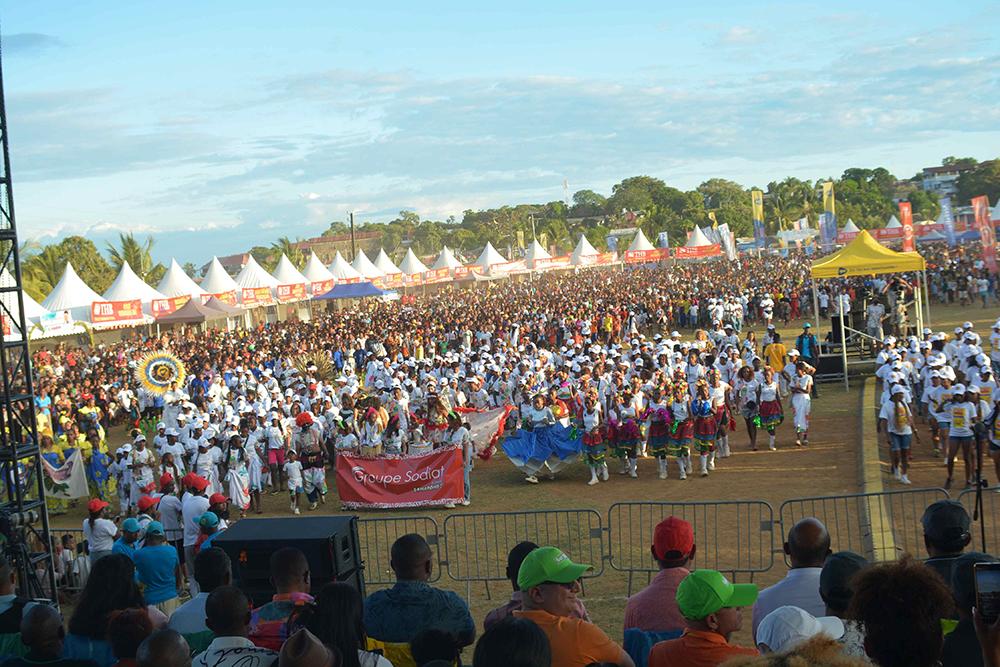
In the Diana region, cultural festivals have multiplied, becoming genuine levers for regional promotion. However, their success remains fragile, balancing between economic benefits and sometimes abrupt disappearances.
Every territory now seeks to create its own cultural event with the ambition of promoting its identity, boosting the local economy, and attracting visitors. While festivals were once mainly organized in district capitals, the phenomenon has now democratized and spread to numerous urban and rural communes.
In the Diana region, these gatherings have evolved from simple popular celebrations into essential tools for territorial promotion, offering residents and visitors an immersion into the richness of local traditions, artistic expressions, and regional expertise.
Most of these events take place in August, coinciding with school holidays and the peak tourist season. However, there are exceptions. At its peak, the Donia Festival took place during the Pentecost weekend, while the Kabaro and Fantsiky Lamonty festivals chose the Easter period.
Some organizations have become benchmarks with national or even international reputations, such as the Sômarôho Festival in Nosy Be, the Sôrogno Festival in Ambanja, and the Summer Colors Festival in Nosy Be, which have established themselves as essential dates on the cultural calendar of Northern Madagascar.
Beyond their cultural and festive dimensions, these events generate significant economic benefits. Organizers hope to recoup their investments, while merchants, restaurateurs, transporters, hoteliers, and street vendors benefit from the influx of visitors to increase their income.
In Nosy Be, the impact on the tourism sector is particularly remarkable, with hotels often fully booked weeks or even a month before the festivities begin. Alongside these historic events, many newer festivals have emerged, though some struggle to attract a large audience and remain limited in scope.
Despite their popularity, the sustainability of these events is never guaranteed. Several festivals that marked their era for over 5 to 10 years, such as the Donia Festival, the Kabaro Festival, and the Fantsiky Lamonty, have eventually disappeared. While musical performances—dominated by the ‘salegy’ rhythm—remain the main driver, some organizers face significant financial losses when attendance fails to meet expectations.
Captured & Published at: 2026-08-05 06:08:56 (Madagascar Local Time EAT)
Original Source: https://www.lexpress.mg/2026/08/antsiranana-place-aux-differents.html