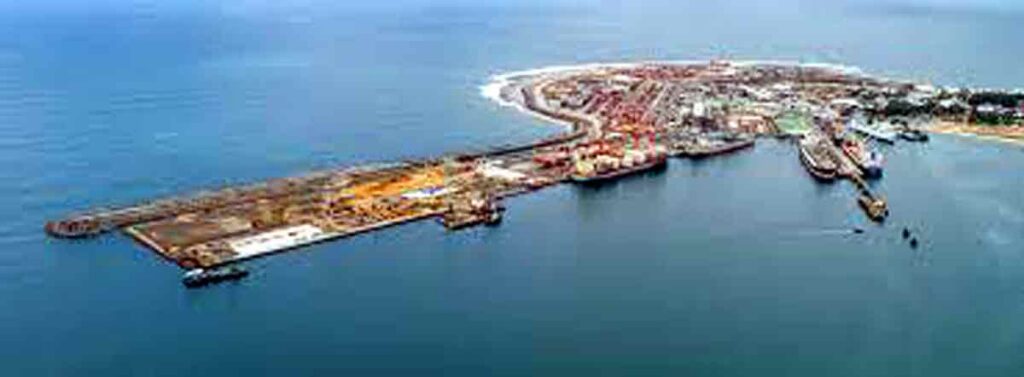
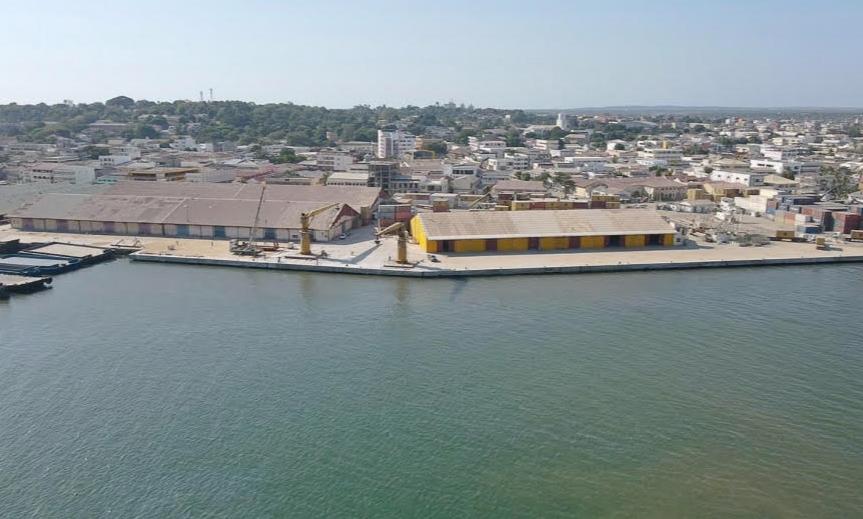
The port of Mahajanga is entering a major rehabilitation phase. The works are intended to strengthen its infrastructure and improve its operational capacity.
Colonel Randrianirina’s visit to the Sakalava region was highly productive. “Dredging the port is now a reality. It will improve navigation and facilitate access to the port, while strengthening economic activities and the development of the region,” he stated. The emergency rehabilitation project for the port of Mahajanga has entered a strategic phase to modernize and secure port facilities. Launched on February 25, 2025, this project aims to enhance the port’s operational capabilities while ensuring the continuity of maritime activities throughout the construction period.
With a cost of 43.26 billion ariary, the project is under the supervision of the Maritime and River Port Agency (APMF) and is funded by the World Bank through an IDA credit. The works have been entrusted to the China Road and Bridge Corporation (CRBC), while the control and monitoring mission is carried out by EGIS Inframad. The scheduled duration for completion is fifteen months and two days.
The project focuses primarily on the reinforcement of the Coste and Vuillemin quays. Related works are also planned, including the rehabilitation of the Vuillemin warehouse, the construction of a new control building, and the restoration of access roads and drainage networks. Fencing compliant with ISPS Code standards will help strengthen the security of sensitive areas.
The port of Mahajanga plays an essential role for the Boeny region and the northwest maritime facade of Madagascar. The complex includes the dhow port, the traditional commercial port, the Schneider port, and the Belinta gas terminal. The main port covers 100,000 m², with a container storage area of 16,935 m² and warehouses totaling 20,060 m².
Despite this importance, the infrastructure is currently operating at the limit of its capacity. At high tide, the available draft at the quay is 4.5 meters, preventing long-haul vessels from docking directly. Medium and large tonnage ships remain at anchor, while their cargo is transshipped onto barges. “The dredging work will allow ships and people to move more easily, which will also contribute to increasing trade and economic activities,” emphasized Colonel Michaël Randrianirina.
The Boeny region, Madagascar’s second-largest agricultural hub and leading shrimp producer, depends on this infrastructure for the transport of inputs and the export of aquaculture products. However, the silting of the bay, logistics costs, road constraints, and environmental requirements remain challenges. Through this restoration, authorities aim to improve the port’s capacity, safety, and competitiveness. The project is also expected to consolidate its role as a strategic fallback port and contribute to the continuity of national maritime trade.
Captured & Published at: 2026-08-31 05:53:57 (Madagascar Local Time EAT)
Original Source: https://www.lexpress.mg/2026/08/mahajanga-le-colonel-randrianirina.html