
Radama II, like his predecessor, was committed to modernism. His desire for progress seemed to herald an era of rapid development. However, he alienated the conservative and reactionary factions by making premature decisions, most notably granting the Frenchman Lambert a charter that gave him unchecked monopoly over the mines and lands in the north of the island. His reign was short-lived: having ascended the throne in 1861, he was strangled with a silk scarf (as shedding royal blood was taboo) on May 2, 1863.
His successors were his wife Rasoherina (1863-1868), his cousin Ranavalona II (1868-1883), and Ranavalona III (1883-1896). As queens representing the Andrianampoini-merina caste, they followed the custom established by Ranavalona I, marrying the Prime Minister—in this case, Rainilaiarivony of the Hova caste, who symbolized the bourgeoisie in power (Manjaka Hova).
The four queens encouraged the return of Europeans to Antananarivo. This return allowed for a resurgence of work, intensified by the arrival of secular elements alongside missionary instructors. Development and progress in the city depended on the architects and skilled workers sent from Europe.
Christian missionaries were the first to return to work, aiming to equip the capital with temples and churches. Consequently, the most significant buildings were realized in the field of architecture, particularly in the construction of religious edifices. Since the funds invested came from Europe, the designs were based on European architectural plans. These construction sites served as workshops and schools for the local workers of Antananarivo.
Over time, these workers gained technical skills, assisting French architects like Jully, who built the French Residence in Ambohitsorohitra (1891-1892), or the British architects Cameron and Pool, who helped provide the capital with numerous comfortable homes (1868-1880), such as the common six-room models and smaller four-room houses. Both were distinguished by brick columns on the facade and a veranda.
These dwellings marked a great improvement over the old ones. Tiles replaced wood, which had itself replaced thatch or reeds; raised wooden floors replaced packed earth; and glass windows appeared. “The capital of reeds and perishable wood had become one of durable stone and brick” (Sibree). These new house models and religious buildings spread rapidly, first throughout Imerina and then across the entire island, as evangelists founding new missions brought masons and workers from Tananarive with them.
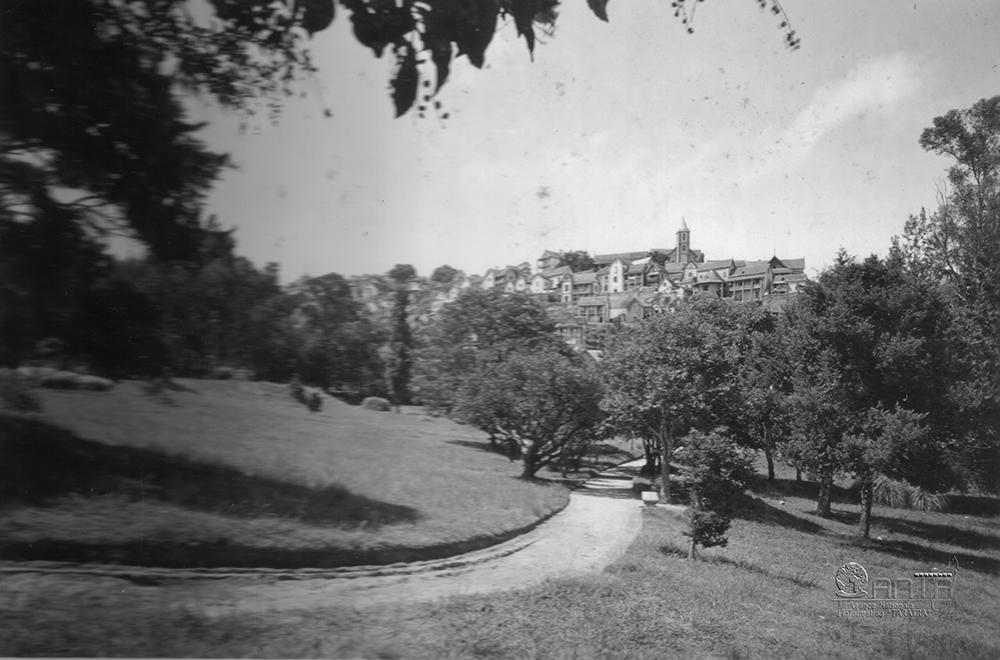
Furthermore, Europeans did not just rebuild the city; they also did much to beautify it. They taught the inhabitants to cultivate beautiful trees, shrubs, and exotic flowers that were previously unknown. Eucalyptus, casuarina, bougainvillea, and Cape lilac were planted starting in 1865. “Twenty years later, they were found everywhere” (Sibree). The appreciation for gardens and flower cultivation spread rapidly among the residents of Antananarivo. Everything from cabbages and lettuce to plum and peach trees, not to mention roses and carnations, was sought after, planted, and adopted with enthusiasm.
The Catholic Mission, which settled in the capital in November 1861, played a significant role. It was on their estate in Ambohipo that projects for using trees in urban planning blossomed. The park was created on alluvial lands by the lake, where forty-seven families of trees, both European and exotic, were tested. This site remained the ancestor of all public gardens in Antananarivo. It was also there that novelties such as a windmill, a suction and force pump, and finally a plow were first operated for the Tananarivians. Finally, it was at Ambohipo that they became accustomed to obtaining the first potatoes, lettuce, carrots, cabbages, celery, and artichokes. For their part, the British residents competed to obtain the best plants and seeds.
Captured & Published at: 2026-09-28 06:38:43 (Madagascar Local Time EAT)
Original Source: https://www.lexpress.mg/2026/09/un-progres-rapide-constate-dans-la.html