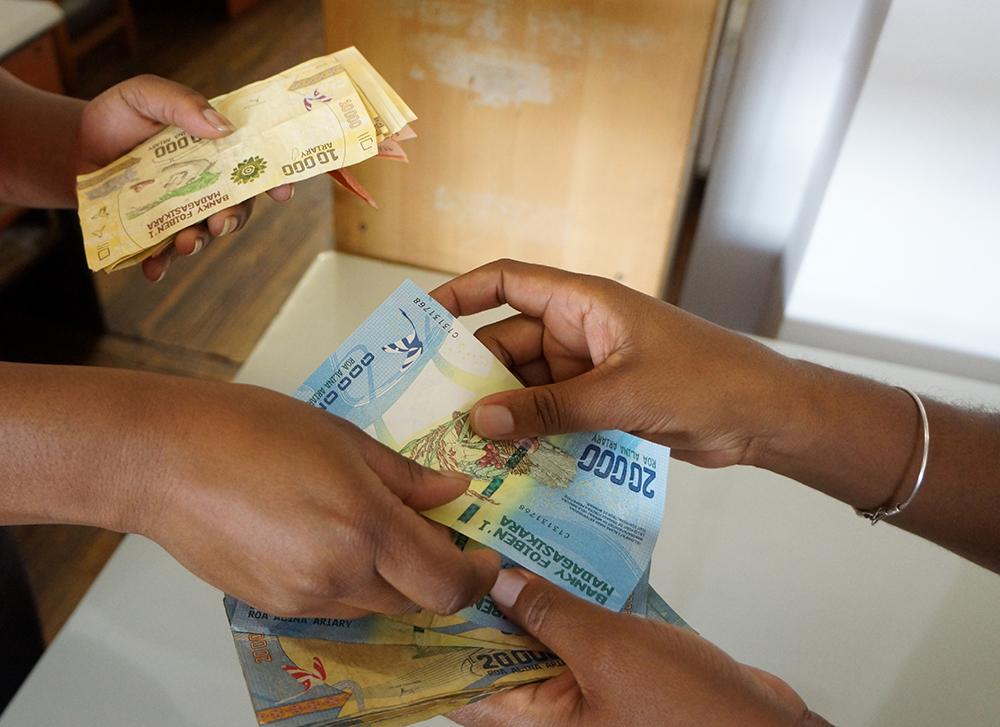
In Madagascar, borrowing is no longer just a development choice, but a daily necessity. According to INSTAT, 40% of households that took out their last loan used it primarily for daily consumption, far ahead of education (7.4%) or starting a business (11.5%).
Households borrow primarily to eat, pay for healthcare, and cover daily expenses. Behind these figures lie individual trajectories and structural causes that fuel a cycle that is difficult to escape. Statistics show that informal credit dominates, with 57.7% of borrowers turning to family and friends, while banks account for only 14.6%. In rural areas, informal lending between individuals reaches 64.8%, often with usurious interest rates ranging from 50% to 300%.
The root of the problem lies in the gap between income and the cost of living. With the minimum wage for the non-agricultural sector set at 300,000 ariary, many families struggle to cover basic needs like food, transport, and housing. For instance, a single lunch for a family of eight can cost 150,000 ariary per month, consuming half of a minimum wage salary.
The study highlights that credit, intended to support economic activity, often becomes a burden when income is insufficient to cover repayment installments. For many, borrowing is not a lever for development, but a survival mechanism to cope with immediate needs, trapping them in a persistent cycle of debt.
Captured & Published at: 2026-10-28 06:08:34 (Madagascar Local Time EAT)
Original Source: https://www.lexpress.mg/2026/10/conjoncture-les-menages-pris-dans-la.html