
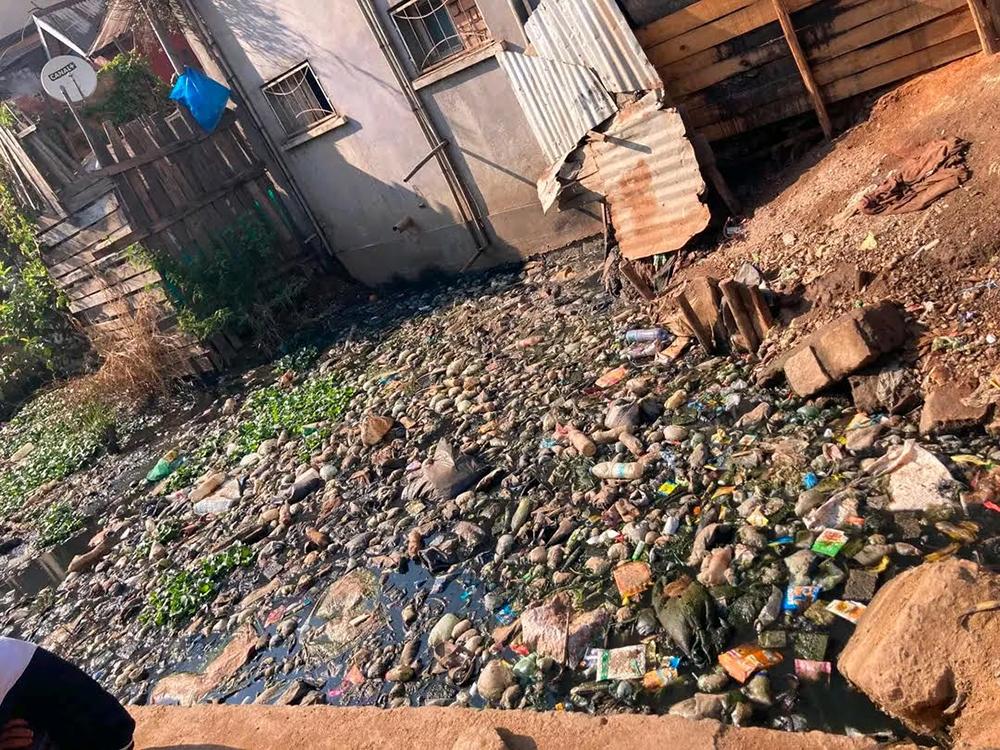
As the rainy season approaches, Antananarivo is tackling the clogging of its canals with a dredging operation covering nearly 50 kilometers. However, its success will depend on the monitoring of the work and the civic-mindedness of the residents.
Accumulated waste, mud, and the risk of obstruction: the state of the drainage networks remains a central issue in limiting flooding. The Urban Commune of Antananarivo has announced a large-scale operation. On the ground, the success of the initiative will depend on the continuity of the work, surveillance, and the teams’ responsiveness to the first heavy rains.
September 30th marks the launch of a vast dredging operation across the capital’s six districts. Scheduled to last nearly a month, it will cover 61 fokontany and approximately 50 kilometers of secondary and tertiary canals. The work is part of a ‘Food for Work’ project and aims to improve water flow by removing waste and deposits clogging the structures. The stated goal is to strengthen the drainage network’s capacity before the arrival of intense rains.
Preparation is not limited to dredging alone. The availability of human and material resources, monitoring of sensitive areas, and the capacity for rapid intervention are also part of the plan announced by the Commune’s risk management department.
Several stakeholders are involved in this mobilization, including relevant technical services, risk management departments, the Malagasy Red Cross, and various partners. The strategy is to intervene proactively rather than waiting for the consequences of heavy rains to act.
In the neighborhoods, community mobilization is another aspect of the preparation. In Manarintsoa Atsinanana and Andavamba Anjezika, nearly 3,000 people participated in a cleanup operation. The efforts focused on removing waste from canals and cleaning their surroundings, a reminder that maintenance cannot rely solely on sporadic operations.
‘Civic-mindedness is essential. Regardless of the efforts made, if waste continues to be thrown into the canals, all the work done risks being in vain,’ emphasizes a sociologist. User behavior remains a determining factor after the cleanup teams have passed.
The challenge is therefore twofold: clearing the canals and preventing them from being quickly clogged again. The announced work must be accompanied by regular monitoring, particularly in flood-prone areas.
With nearly 50 kilometers of canals targeted, the operation represents a significant project. However, its effectiveness will be measured beyond the number of kilometers cleaned. The capacity of the networks to drain water, the speed of interventions, and the maintenance of cleanliness throughout the high-risk period will be the true tests of Antananarivo’s preparation.
Captured & Published at: 2026-09-29 06:08:35 (Madagascar Local Time EAT)
Original Source: https://www.lexpress.mg/2026/09/saison-des-pluies-antananarivo-mise-sur.html