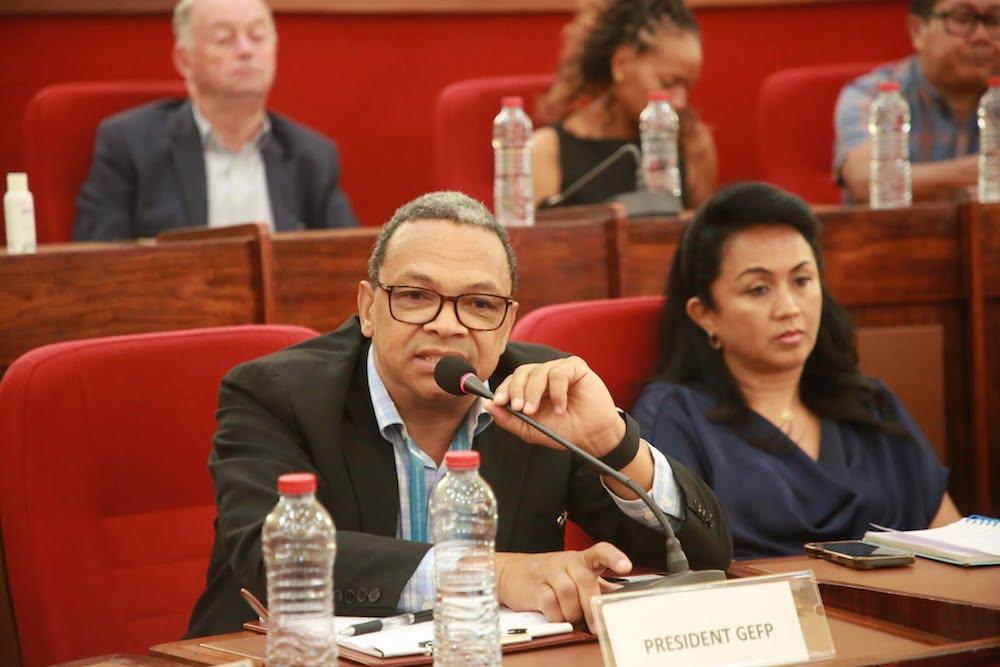
After the GEM, it is now the GEFP’s turn to sound the charge against the State, while also implicating the IMF. The group is raising the alarm over the economic insecurity caused by fiscal measures included in recent finance acts, including the 2026 budget.
A “solemn alert.” This is the message issued by the Grouping of Free Zone Enterprises and Partners (GEFP) in a statement published yesterday. “The Free Zone regime, which has enabled the creation of more than two hundred thousand direct jobs in Madagascar, is being weakened year after year,” the group asserts. It is a cry of distress directed at both the Malagasy State and the International Monetary Fund (IMF).
According to the GEFP’s plea, the core issue is the increasing instability of the rules of the game and the economic insecurity generated by new taxes and fiscal obligations introduced in finance acts since 2023, leading up to the 2026 version. These pressures, the organization argues, are linked to the State’s commitments to the IMF. The new tax measures provided for in the supplementary finance act recently adopted by the National Assembly were seemingly the final straw.
“Since 2023, new taxes, charges, and fiscal obligations have been introduced and modified by finance acts within the framework of commitments made to the IMF. At the same time, VAT reimbursements are suffering from excessive delays, and companies no longer know which rules they will operate under tomorrow. (…) The finance acts adopted from 2023 to 2026 have successively introduced tax and customs provisions that appear to contradict the founding commitments of the free zone regime,” the Grouping laments.
The GEFP points to the instability of rules and the failure to respect state commitments, citing the 2008 law on enterprises and free zones, while highlighting the risk to Madagascar’s attractiveness for investors. It recalls that Article 6.8 of this text stipulates that taxes or levies not provided for in the law should not be added to the fiscal regime, adding: “This guarantee encouraged investors to set up factories, develop activities, and create jobs in Madagascar.”
The Grouping continues: “Today, this law has not been repealed, but year after year, general finance acts progressively add new burdens without concern for the foundations of the Free Zone law. (…) How can the State ask investors to trust Madagascar if the promised rules change without clear discussion and without guarantees for the future? No company can invest sustainably when it does not know what rules will be applied the following year.”
Regarding the “death sentence” of the regime, the GEFP also cites the delay in VAT refunds that were agreed upon in February 2024. In its solemn alert, the group highlights the human dimension, raising the issue of risks to direct and indirect jobs generated by free zone companies, while also noting the consequences for state revenue. “Broadening the tax base by destroying the productive base that fuels it is not fiscal rigor,” it maintains.
The GEFP describes the current situation as a “death sentence for the free zone regime.” Beyond the State, it also blames the IMF. “The new fiscal orientations applied to the Free Zone regime cannot be presented as national decisions completely independent of negotiations conducted with the IMF. Letters of intent and memoranda on economic and financial policies show they are part of commitments negotiated between Madagascar and this institution,” it criticizes.
“The IMF cannot demand the broadening of the tax base, the reduction of regimes labeled as derogatory, and the increase in public revenue, and then lose interest in the economic and social consequences of the measures taken to achieve these objectives,” adds the GEFP, arguing that “a strictly accounting-based approach is insufficient when it does not measure all the contributions of the free zone to the real economy.”
Consequently, the GEFP is “urgently” asking the government to publicly state its position on the retention or otherwise of the free zones. It also requests “immediate consultation before any new measure,” as well as compliance with the 2008 law. It further requires a “credible and regular” schedule for VAT refunds and “an independent and comprehensive macroeconomic study of the costs and benefits of the Free Zone regime before any irreversible decision.”
The Grouping concludes its statement by declaring that “silence will protect no jobs. The GEFP calls on Malagasy authorities, Parliament, the IMF, trade unions, and the general public to measure the danger. There is still time to act.”
Captured & Published at: 2026-07-02 06:12:51 (Madagascar Local Time EAT)
Original Source: https://www.lexpress.mg/2026/07/loi-de-finances-le-gefp-interpelle.html