
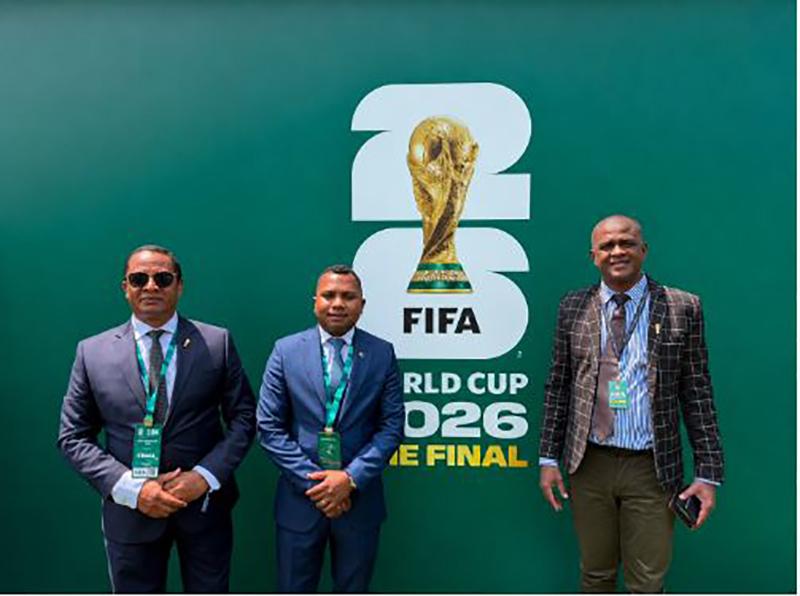
The 2026 World Cup, which saw Spain defeat Argentina in the final, concluded on Sunday. It will be remembered as a turning point for African football. Nine out of ten representatives advanced past the group stage, while Morocco became the first African nation to reach the semi-finals in two consecutive World Cups, proving their 2022 run was no fluke.
Cape Verde, Egypt, Senegal, Ivory Coast, and DR Congo also demonstrated that African nations can now compete with the world’s best. This progress is built on high-performing training centers, players competing in major leagues, improved federation governance, and sustained investment in infrastructure.
For Madagascar, this World Cup should serve as more than just a spectacle. The presence of Minister of Youth and Sports, Alain Désiré Rasambany, and Alfred Randriamanampisoa, President of the Malagasy Football Federation, at the final should benefit the country. While the Barea have kept hopes alive for a first qualification, obstacles remain: a lack of professionalization in the league, inadequate infrastructure, uneven youth training, and national competitions that struggle to raise standards.
The Moroccan example shows that a project built over fifteen to twenty years can transform a nation. Success relies not just on the diaspora, but on ambitious training policies, modern technical management, and a shared vision between the state, the federation, and clubs.
The debate over a potential 64-team World Cup has begun. While expansion would offer more spots to emerging nations, some fear a decline in quality and an overloaded schedule. FIFA has yet to make a decision.
For the Great Island, the priority is not hoping for more qualifying spots. Even with a 64-team tournament, qualification requires a deep restructuring of national football.
Coach Titi Rasoanaivo shares this view: “The gap is narrowing with major nations. Out of the ten African teams, only Tunisia disappointed. Madagascar must define a real policy and a coherent development project. Sport needs a national consensus. We have many football schools, but practice time remains insufficient. We must invest for the long term rather than seeking immediate results without a future.”
The 2026 World Cup offers a double lesson: Africa is asserting itself as a rising power, but only those who invest sustainably in training, infrastructure, and governance will reap the rewards. Madagascar now knows the path to follow.
Captured & Published at: 2026-07-21 05:42:26 (Madagascar Local Time EAT)
Original Source: https://www.lexpress.mg/2026/07/mondial-2026-les-succes-africains.html