
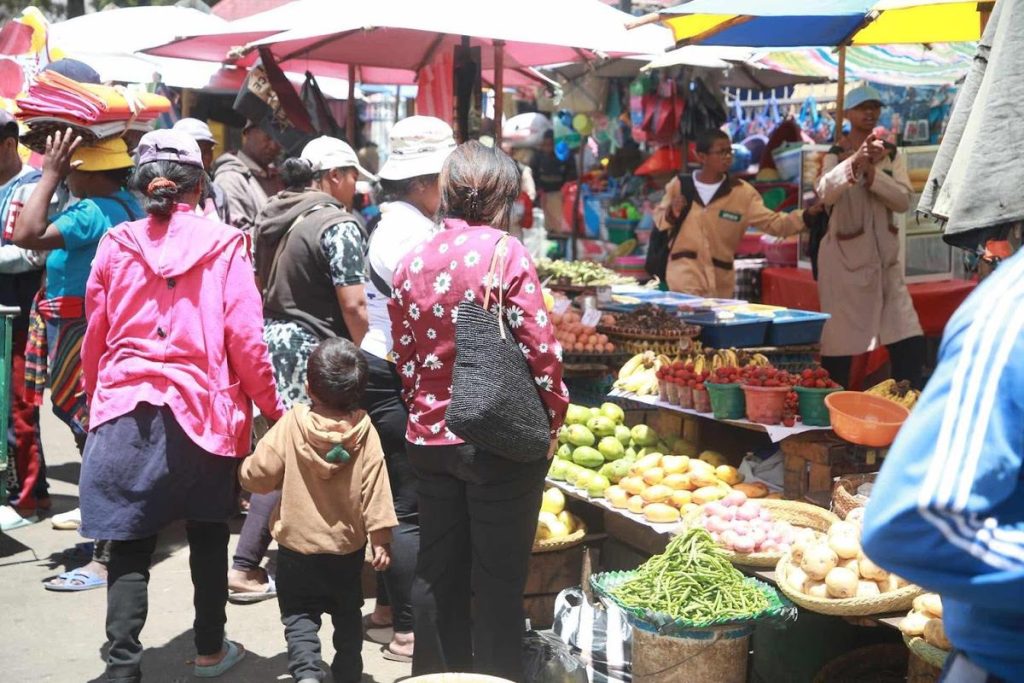
The rising cost of living is forcing households to reduce their purchases and sacrifice dietary diversity. For many, feeding themselves has become a daily struggle.
In Antananarivo, the contents of a plate depend directly on a household’s financial means. Faced with the cost of food products, some families reduce portions, while others give up certain foods to ensure the whole household is fed. Meat and vegetables, essential for a varied diet, weigh increasingly heavily on daily expenses.
In Véroniaina’s household of eight, about 5,000 ariary is spent on lunch. Over a month, this expense represents nearly 150,000 ariary if the amount remains the same every day, for this meal alone. In the morning, breakfast is limited to tea and bread, while the lunch leftovers are eaten for dinner. Meat remains rare, and dairy products are difficult to buy regularly. A kilo of zebu meat costs about 20,000 ariary, a price that limits its consumption for low-income families. Cooking costs also burden the budget. A bag of charcoal costs about 40,000 ariary, in addition to expenses for oil and other ingredients needed for meal preparation. Every purchase must therefore be calculated to meet the needs of the entire family.
Vegetable prices also dictate choices. Georgette Rakotomalala, a grocery store owner in Ankadindratombo, notes that a kilo of carrots costs about 2,500 ariary, compared to nearly 4,000 ariary for green beans. Onions are also sold for around 4,000 ariary per kilo. For households that must prepare several meals a day, these expenses add up quickly. Some prioritize cheaper products or buy in small quantities to stick to their budget.
This situation occurs in a context where income must cover several essential needs. Since October 2026, the minimum starting wage for the M1 category in the non-agricultural sector has been set at approximately 315,000 ariary per month. For the employees concerned, this remuneration must cover food, housing, transport, and other current expenses. For a large family, allocating this sum becomes a difficult exercise when resources do not match needs.
Restrictions also affect the diversity of meals. When prices limit purchasing options, families prioritize foods that can satiate everyone. Some products are consumed less often, while quantities are adjusted based on available money. The contents of the plates thus reflect the household’s financial constraints as much as its nutritional needs.
Dr. Domoina Rakotonoely emphasizes the importance of a varied diet and regular vegetable consumption. However, these recommendations remain difficult to apply when food expenses compete with other household costs. For low-income families, eating a balanced diet depends not only on eating habits but also on the ability to purchase the necessary products.
The difficulty, therefore, does not lie solely in the availability of food in the markets. It also concerns financial accessibility. When every expense must be calculated, diversifying meals becomes a daily challenge. For many households, eating one’s fill and eating in a balanced way are not always compatible.
Captured & Published at: 2026-10-17 05:54:00 (Madagascar Local Time EAT)
Original Source: https://www.lexpress.mg/2026/10/alimentation-manger-la-mesure-de-ses.html