
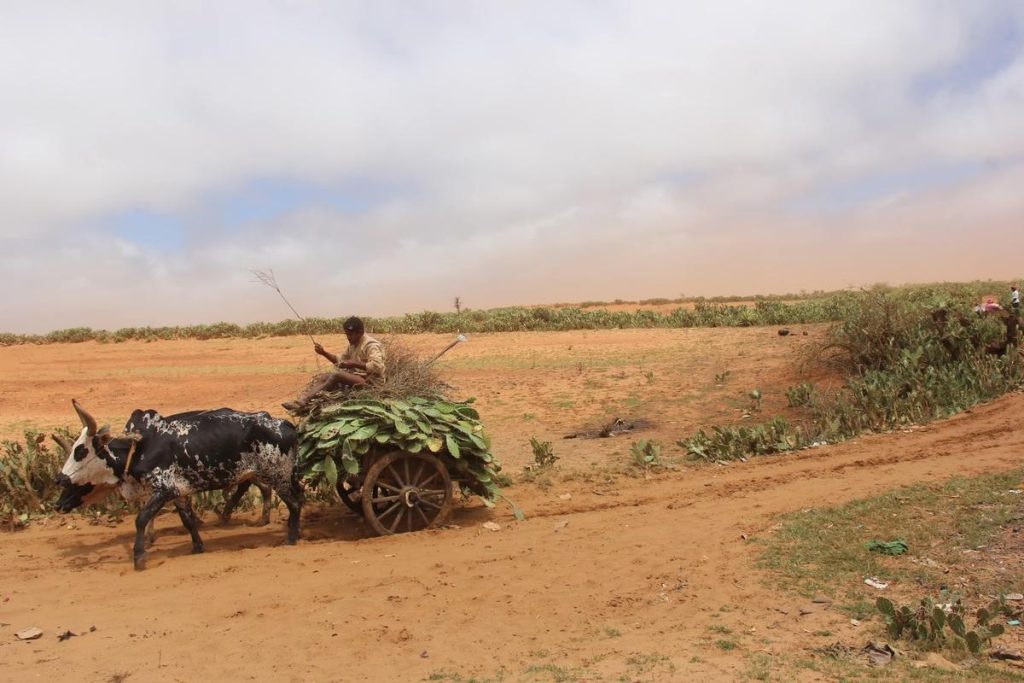
Madagascar is among the twenty-two countries most exposed to hunger, according to the Food and Agriculture Organization of the United Nations (FAO). Based on the latest analysis from the Integrated Food Security Phase Classification (IPC) published in July, 3.7 million people are expected to face acute food insecurity, including 426,000 in a state of food emergency.
For Eddy Rinah Ramananandro, an economist at the Circle of Reflection of Economists of Madagascar (CREM), the impact of climate change, exacerbated by El Niño, will “undoubtedly” have major economic and social consequences. The agricultural sector would be the first to be hit. “The irregularity and scarcity of rainfall will lead to poor harvests, particularly for food crops such as rice, cassava, or corn. Yet, this sector is the pillar of the Malagasy economy: it employs more than 75% of the working population and contributes a significant share of the Gross Domestic Product (GDP),” he emphasizes.
The chain of consequences, as described by the economist, is linked: “The drastic drop in agricultural production will generate major macroeconomic and financial imbalances. In domestic markets, the scarcity of food will trigger price hikes, eroding the already fragile purchasing power of Malagasy households.” To bridge this deficit and avoid a health catastrophe, the State would be forced to increase its imports of basic necessities, particularly rice. “However, this increase in imports weighs heavily on the country’s trade balance and depletes foreign currency reserves,” he adds.
Faced with these emergencies, the government should, according to the economist, reorient resources initially intended for infrastructure, health, and education toward humanitarian response and emergency relief if it does not anticipate preventive measures.
Actions already underway are moving in the direction of anticipation. The World Food Programme (WFP) has activated anticipatory actions in the most affected southern districts, notably Bekily, Ambovombe, Beloha, Tsihombe, and Antanimora Sud.
On the State side, seeds and production support equipment will be distributed in several regions to farmers’ groups, according to the Ministry of Agriculture and Food Sovereignty. Many varieties have already been distributed, but the effort will be strengthened in 2027, explains the Secretary General of the Ministry of Agriculture and Food Sovereignty. The construction of storage warehouses is also planned in collaboration with this ministry. The goal is to increase farmers’ production capacity and prepare them for the effects of climate change.
By Donné Raherinjatovo and Miangaly Ralitera
Captured & Published at: 2026-10-16 06:23:58 (Madagascar Local Time EAT)
Original Source: https://www.lexpress.mg/2026/10/secheresse-la-faim-menace-37-millions.html