
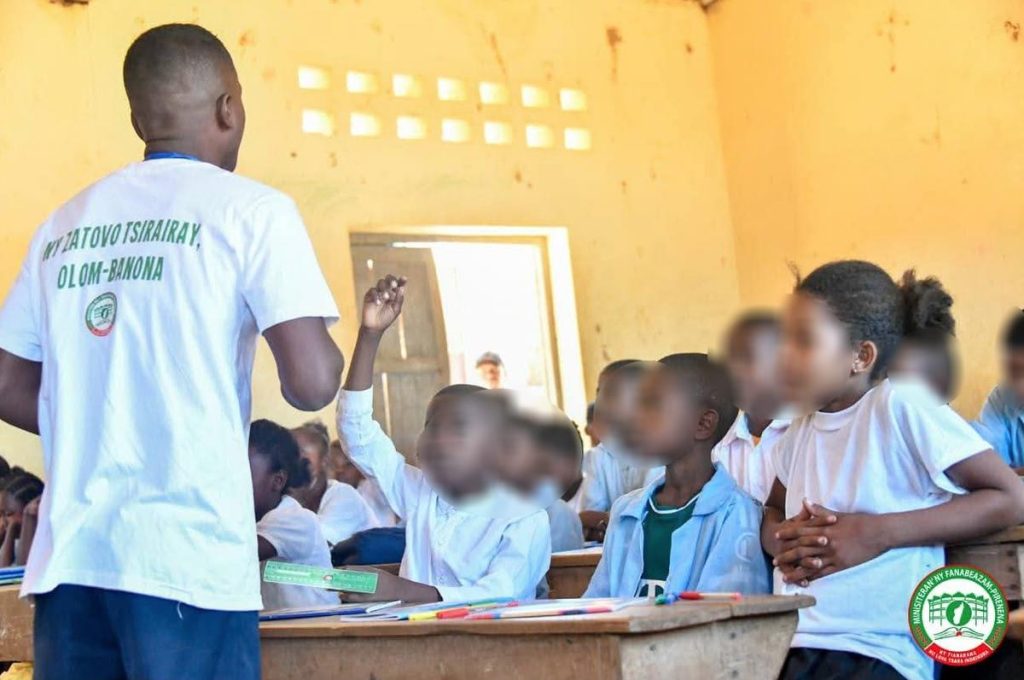
A new curriculum has come into effect for the 2026-2027 school year. The Ministry of National Education aims to bridge the gap between classroom learning and daily life through this reform. Thirty years after its last revision, the curriculum has been overhauled to better reflect current realities, affecting all levels from primary to high school in both public and private institutions following the state curriculum.
Yves Martin Razafimandranto, Director General of Pedagogy at the Ministry, notes that the old program was disconnected from modern society, citing outdated examples like postal letters instead of digital messaging. The reform shifts the focus from rote memorization to research, deep understanding, and practical application. While 80% of the themes remain similar, the pedagogical approach has evolved, introducing subjects like Science and Technology in primary school and English from the T4 level.
The 2027 BEPC exam will feature a transitional structure, with candidates tested based on the specific program (new or old) they followed. To ensure equity, the Ministry has mandated that teachers from both public and private sectors collaborate on exam design and grading. A double-correction system will be implemented to harmonize evaluations and prevent grading discrepancies.
Despite these measures, concerns remain among students and parents regarding the lack of clarity and the potential for inequality. The Ministry emphasizes that this is a transitional phase, with the ultimate goal of aligning all institutions with the new curriculum to ensure a standardized and fair educational system.
Captured & Published at: 2026-10-14 05:53:46 (Madagascar Local Time EAT)
Original Source: https://www.lexpress.mg/2026/10/reforme-scolaire-le-defi-de-lequite-au.html