
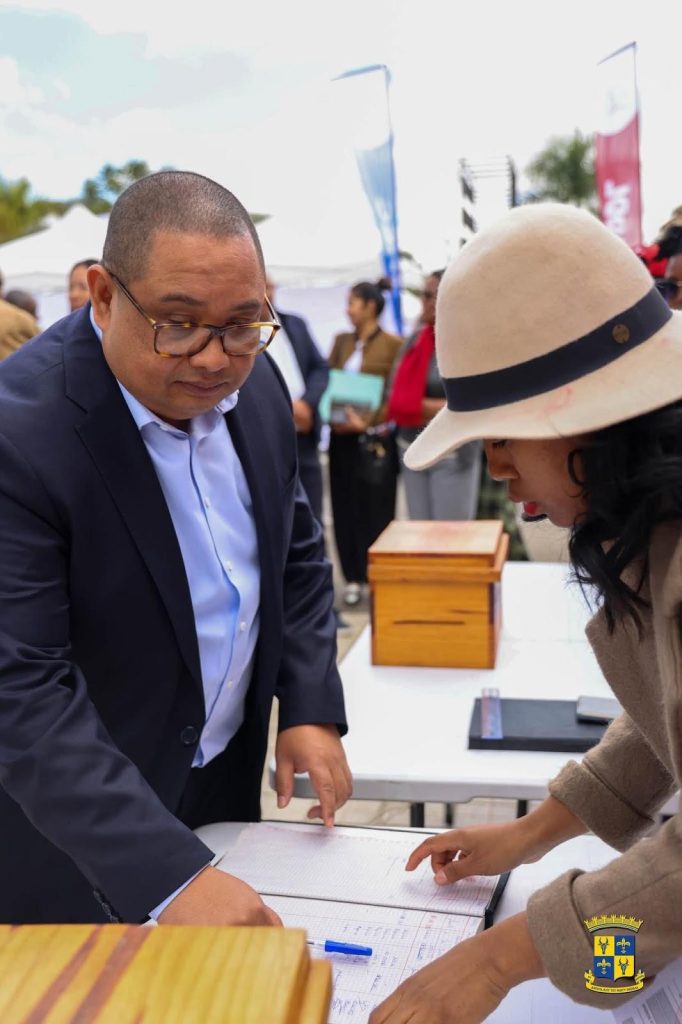
Antananarivo is managed by the urban commune, but its development relies on collective action. The government, the commune, and the fokontany each contribute to moving the city forward.
As the country’s capital, the city holds a special status. The Urban Commune of Antananarivo (CUA) enjoys real autonomy, allowing it to govern itself within an adapted framework. Its responsibilities are vast: animation, planning and coordination of local development, transport, road management, sanitation, hygiene, water access, and public lighting. It is also responsible for enforcing urban planning rules. In this capacity, the municipality can order the demolition of dangerous structures, although a decision from the summary court remains mandatory before any intervention.
Despite its prerogatives, the municipality struggles to manage the capital’s development alone. “Regarding road infrastructure, for example, the maintenance of communal roads is theoretically our responsibility. However, due to insufficient budget, we can only perform maintenance work. For major projects requiring complete resurfacing, government support is essential,” a source within the CUA confided.
Ministries state that the assistance provided strictly respects the city’s decision-making autonomy. “State interventions are based on technical and financial support. If projects are necessary to meet the population’s needs but local resources are lacking, the government can take over,” explained a ministerial department.
The capital’s finances rely mainly on state subsidies, local taxes, and the household waste fee (ROM). However, revenues remain meager due to persistent tax incivility. Out of the 200,000 homes identified in Antananarivo, only 33,000 properties pay property tax, barely 15% of potential taxpayers according to figures released by the city hall in August.
In this context, the 192 fokontany of the capital are essential pillars for the central administration. Their leaders actively participate in developing programs. The city hall also delegates several administrative and proximity tasks to the fokontany chiefs, such as issuing certificates of residence, celibacy, or life, as well as mediating neighborhood conflicts.
“Recently, the commune asked us to intensify awareness campaigns on sanitation and tax civic-mindedness. No development is possible without a contribution from the grassroots and a profound change in mentality,” emphasized the president of the Ampangabe fokontany.
Finally, the Prefect of Police of Antananarivo, a delegate of the Ministry of the Interior, represents the State to the commune. He ensures the ex-post legality control of acts taken by the municipality.
Captured & Published at: 2026-09-16 06:09:10 (Madagascar Local Time EAT)
Original Source: https://www.lexpress.mg/2026/09/gouvernance-locale-antananarivo.html