
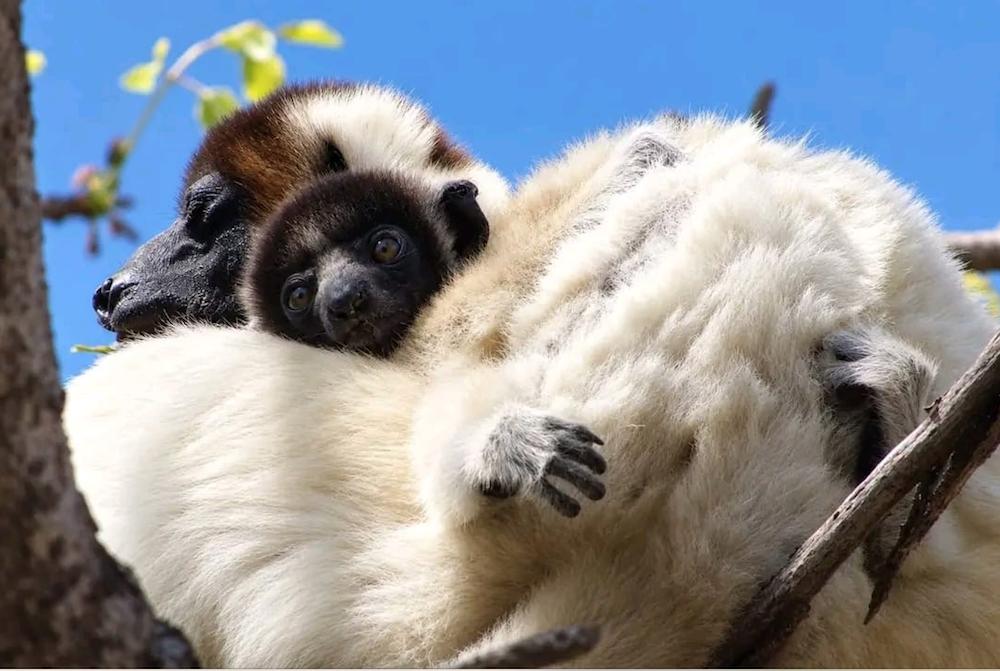
Thirteen baby Sifaka have been born in the forests of Mahajeby and Dabolava, offering a glimmer of hope for this critically endangered species.
Ten births were recorded in the forests of Mahajeby, in the Fenoarivobe district of the Bongolava region, and three in Dabolava, Miandrivazo, in the Menabe region. The arrival of these thirteen baby Sifaka, belonging to the Propithecus coronatus lemur species, is being warmly celebrated by environmental and biodiversity conservation stakeholders in the country.
“This is a positive signal for biodiversity. It also reflects the results of efforts made by grassroots community organizations in community forest management. Communities are actively involved in the sustainable management of forests and species,” noted the Ministry of Environment and Sustainable Development.
Gestation lasts about five months, and females give birth to a single offspring per litter. Births for this lemur species generally occur during this dry and cool season. A specialized site notes that the Sifaka has only one litter every three years. Female sexual maturity is reached around the age of two and a half. The Propithecus coronatus is one of the species classified as critically endangered by the International Union for Conservation of Nature (IUCN).
Sifaka remain highly threatened due to deforestation, slash-and-burn agriculture, and charcoal production. Habitat fragmentation also reduces genetic exchange between groups. These lemurs are known to play an important ecological role as “forest ecosystem engineers.” They act as essential umbrella species for biodiversity conservation. Their constant movement through the canopy of dry or humid forests helps propagate local flora and ensures the natural regeneration of forest habitats.
“Sifaka are best known for their dance-like gait. These dancing lemurs stimulate ecotourism, generating income for village communities encouraged to implement sustainable forest management,” reacted a local tour guide, Lova Rabenatoandro. The Ministry of Environment and Sustainable Development emphasizes that the Mahajeby forest in Bongolava will soon become a protected area to strengthen the protection of the forest and its species.
Captured & Published at: 2026-08-12 06:09:25 (Madagascar Local Time EAT)
Original Source: https://www.lexpress.mg/2026/08/biodiversite-la-naissance-de-treize.html