The Great Island (Madagascar) is looking to accelerate its public investment projects. The current disbursement rate remains low, which is hindering a large portion of the country’s development initiatives.
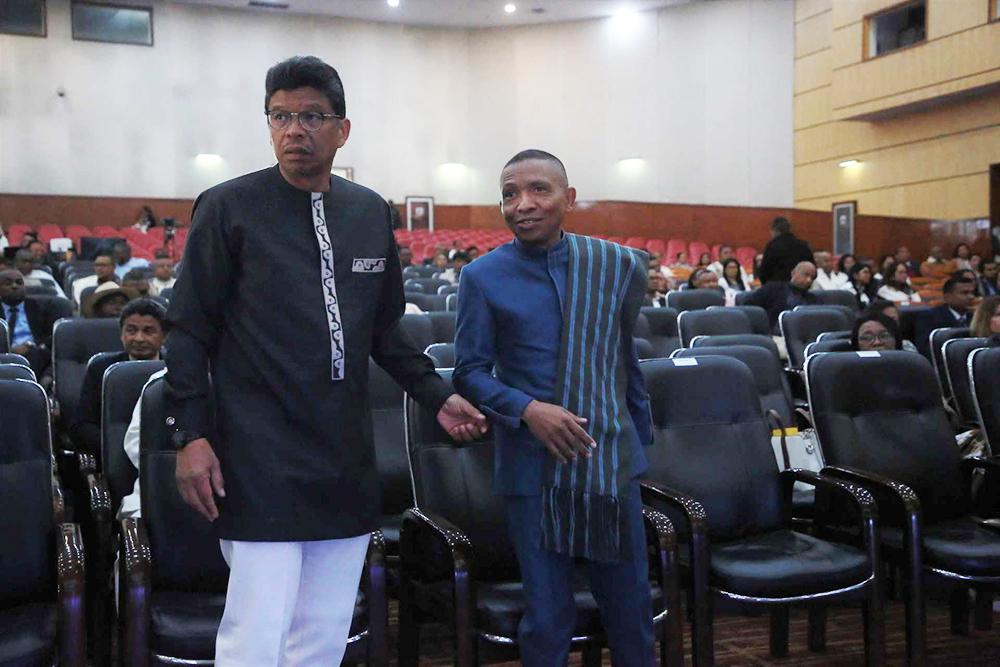
Public investments remain insufficient, and vital projects are suffering as a result. This observation was made yesterday at the Ivato International Conference Center during the semi-annual budget execution review. In the first half of the year, the disbursement rate, particularly for public investment projects, remained low.
As a result, the State is struggling to keep pace with major financing projects, whether in roads, energy infrastructure, or industrial development, due to the low disbursement rate of public funds. “Budget execution for infrastructure investment is very weak, even though the country needs solid infrastructure to support its economic development,” lamented Prime Minister Mamitiana Rajaonarison yesterday.
The head of government explained that administrative delays and disbursement procedures for essential funds are penalizing the country in the realization of its structural projects. The concrete benefits are not yet being felt by the population. “If we manage to disburse funds quickly, the country will change significantly,” he added.
This semi-annual review had not taken place for six years. “This may explain why these anomalies in budget execution were not detected earlier. In some cases, because disbursements take time, compensation for families affected by public utility projects is delayed. This causes projects that are supposed to be executed quickly to stall,” explained Dr. Herinjatovo Aimé Ramiarison, Minister of Economy and Finance.
According to the minister, for some projects scheduled to last three years, the disbursements intended for compensation take the same amount of time, which slows down the progress of major works. The same applies to the maintenance of public infrastructure. “If roads are impassable, the country loses nearly 2% of its GDP each year. Conversely, if they are well maintained, companies can increase their competitiveness. The disbursement of these funds would accelerate projects of this type,” the Finance Minister confirmed.
For the second half of the year, the government intends to correct the course. The country has been shaken by various crises. Cyclones Fitia and Gezani, which paralyzed the economic heart of the Great Island, as well as the rise in oil prices, led the executive to revise some of its forecasts downward. Combined with massive imports, these difficulties led to a sharp drop in tax revenues.
Tax revenues fell by 10% compared to the first quarter of 2025. With the supplementary finance law recently adopted for the second half of the year, the country has curbed imports, notably by eliminating tax exemptions on certain products, such as rice and second-hand clothing. According to the figures presented during this semi-annual review, the second quarter was more favorable. Imports decreased and tax revenues increased by 6% compared to 2025.
Captured & Published at: 2026-08-01 05:54:09 (Madagascar Local Time EAT)
Original Source: https://www.lexpress.mg/2026/08/budget-la-grande-ile-veut-accelerer-ses.html