
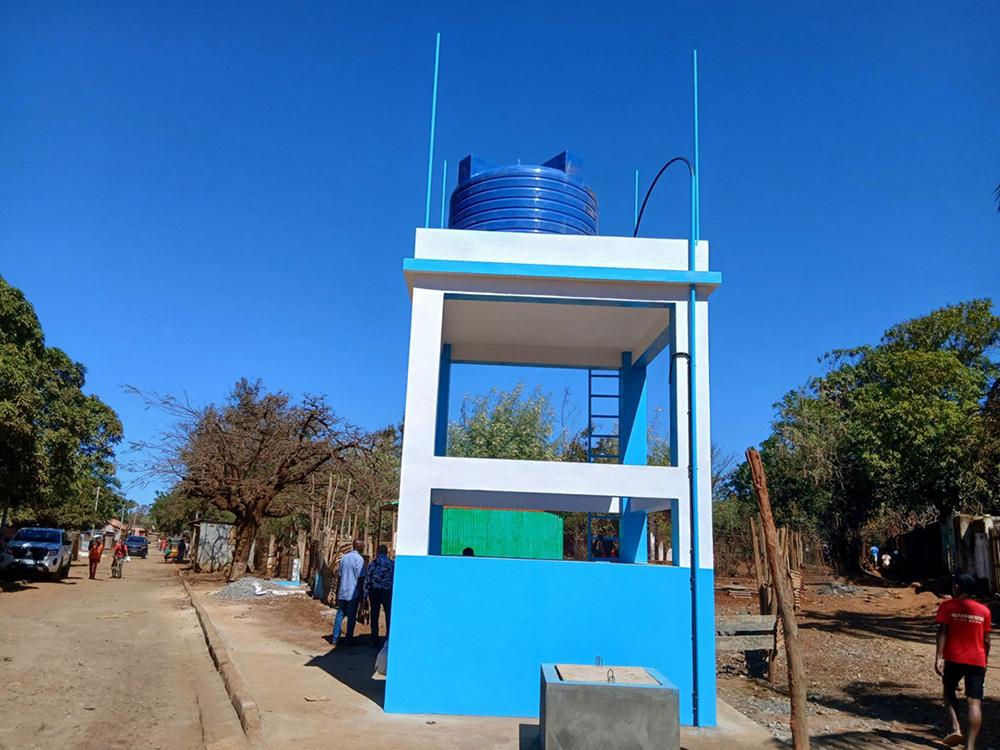
After several years marked by difficulties in accessing drinking water, residents of the northern capital are gradually seeing an improvement in their daily lives. In several neighborhoods of the city, drilling work is multiplying, offering a concrete alternative to the shortcomings of the Jirama distribution network.
Water scarcity has long been one of the main concerns for households in Antsiranana. Frequent cuts and low network pressure force many families to travel several kilometers to fetch water or buy it at often high prices.
Faced with this reality, initiatives have intensified in recent months. Several boreholes have been completed in different neighborhoods, including at the University of Antsiranana, allowing thousands of residents to have access to a local water point.
The realization of these infrastructures relies on several sources of funding. Private operators have invested in creating boreholes for both individuals and businesses. At the same time, the state continues its efforts through funding granted by certain ministries to improve access to drinking water in the most vulnerable areas.
Members of Parliament are also participating in this dynamic through resources mobilized under the Development Support Investment Account (CIAD). These funds make it possible to finance local infrastructure that directly meets the needs expressed by the populations.
However, a large part of the work carried out in Antsiranana remains the result of international solidarity. Several non-governmental organizations, humanitarian associations, and foreign partners are financing or co-financing drilling projects to sustainably improve the living conditions of local communities.
For women and children, who are traditionally responsible for the chore of fetching water, these new boreholes also represent a considerable saving of time that can be devoted to studies, income-generating activities, or family life.
Through the multiplication of boreholes, the government affirms its desire to accelerate the improvement of basic social services and strengthen the resilience of the territories.
“In the DIANA region, this dynamic accompanies a broader ambition. It is about creating the necessary conditions for economic development, improving the well-being of the populations, and the sustainable attractiveness of the territory. Through the multiplication of boreholes, the government wants to meet the immediate needs of the populations and lay the foundations for sustainable territorial development,” explained the regional director of water, Armand Rakotoniaina, during the technical reception of four boreholes installed in four neighborhoods.
But while the construction of new boreholes is an important step forward, their sustainability will depend on the implementation of an effective management and maintenance system. The training of management committees, the availability of spare parts, and regular technical monitoring remain essential conditions to ensure the proper functioning of the installations in the long term.
Captured & Published at: 2026-07-17 05:42:01 (Madagascar Local Time EAT)
Original Source: https://www.lexpress.mg/2026/07/antsiranana-les-forages-se-multiplient.html