
One might wonder how much imagination exists in the travelogues written by navigators of past centuries. Or perhaps they were novels embellished from earlier books! Such is the case, for example, of Thomas Herbert (1663), who describes Madagascar as “the largest island in the world, divided into four tetrarchies, governed by four kings who are independent and very jealous of each other’s greatness.”
Describing the inhabitants, he asserts that those on the coasts are all Muslims, while the “Mediterranean” people are all pagans, following no laws other than those given by nature. “They punish murder with death, adultery with public infamy, and theft with banishment.” However, he clarifies that these “Mediterranean” people prefer fishing to plowing, not out of laziness, but due to a lack of knowledge in agriculture.
Continuing his description of the Malagasy people, Thomas Herbert states that they are generally very courageous and skillful. “Men are accustomed from childhood to war, to covering their naked bodies with large, massive shields (targes), and their right hand to wielding a long ebony pike, armed with a cutting iron as clear and shining as silver. By this means, they acquire such great skill in handling this type of weapon that there is no nation in the world more adept at it.”
Their dark complexion is explained by the fact that the natives care little about covering their bodies against the heat of the sun. On the contrary, they enjoy rubbing themselves with fat and tallow to make their skin glisten, “which makes them stink to such an extent that one cannot stand near them.” With long, curly black hair—those with the longest being the most beautiful—their only clothing is a small leaf “to cover the parts that nature itself takes care to hide.” Moreover, they have pierced and very wide ears, “and it is one of their beauties to scarify the skin and represent various figures on it!”
Regarding marriage, “they allow bigamy and marry very young. Boys at 12 and girls at 10, such that they barely know what virginity is.” This very young age likely explains their love for entertainment and novelty, going “hunting for dogs and birds” or fishing; or “performing ballets in their own fashion, shouting and beating their hands and chests, while their women, with a somewhat wild harmony, which they accompany with their eyes and hands, set their dance to an exact measure so that the men, matching their steps to it, do not overheat in this violent exercise.”
And what of the soil? It is rich in all sorts of metals and minerals (gold, silver) and “according to Duarte Lopes, in iron and copper. But as soon as they knew of the cruelty and greed of the Portuguese, they forbade their use and would no longer allow digging, preferring to be content with herbs, drugs, and grain—which are in great abundance on the island—rather than exposing themselves with their gold and pearls to the discretion of the Portuguese, who, along with their other bad qualities, have the particularity of being greedier than any other nation in the world.”
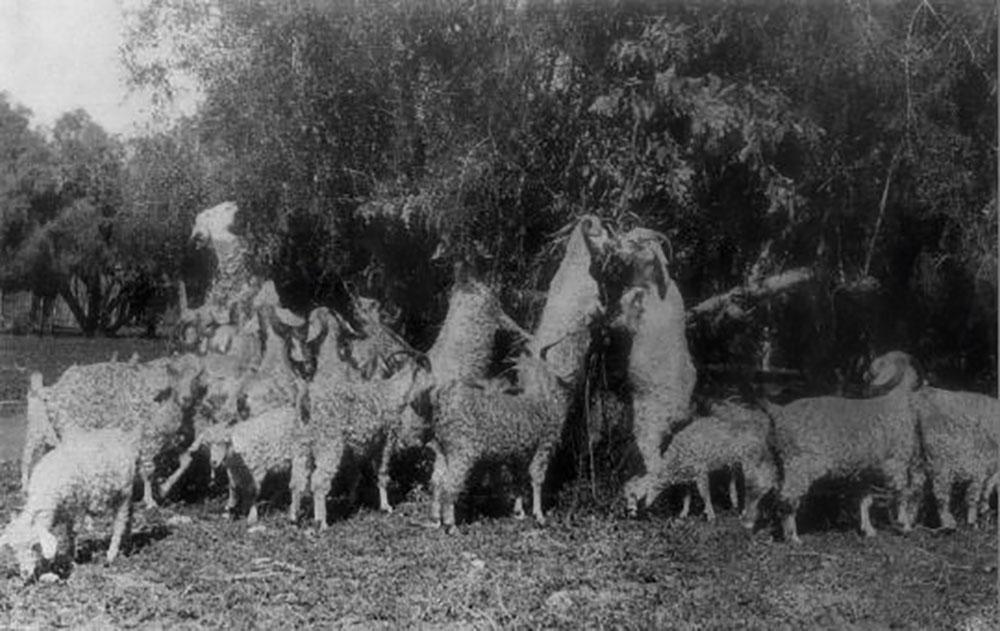
Addressing the “animal and cultural” riches, Thomas Herbert insists on the existence of camels, wild beasts, leopards, goats and milk, chickens and eggs, wheat, barley, rice, “and all other fruits that the earth is capable of producing” (orange trees, lemon trees, lime trees, “poneils,” “plancs,” sugar cane, ginger, “toddy,” coconuts…).
And perhaps running out of imagination, he concludes: “We shall say no more. Let us say it is a pity to see this country possessed by a people who have no knowledge of God nor of virtue; who hide so many precious treasures and who cannot use the advantage of so many beautiful ports, whose location promises them trade with the whole world.”
Captured & Published at: 2026-07-01 07:13:27 (Madagascar Local Time EAT)
Original Source: https://www.lexpress.mg/2026/07/ce-peuple-courageux-que-sont-les.html