
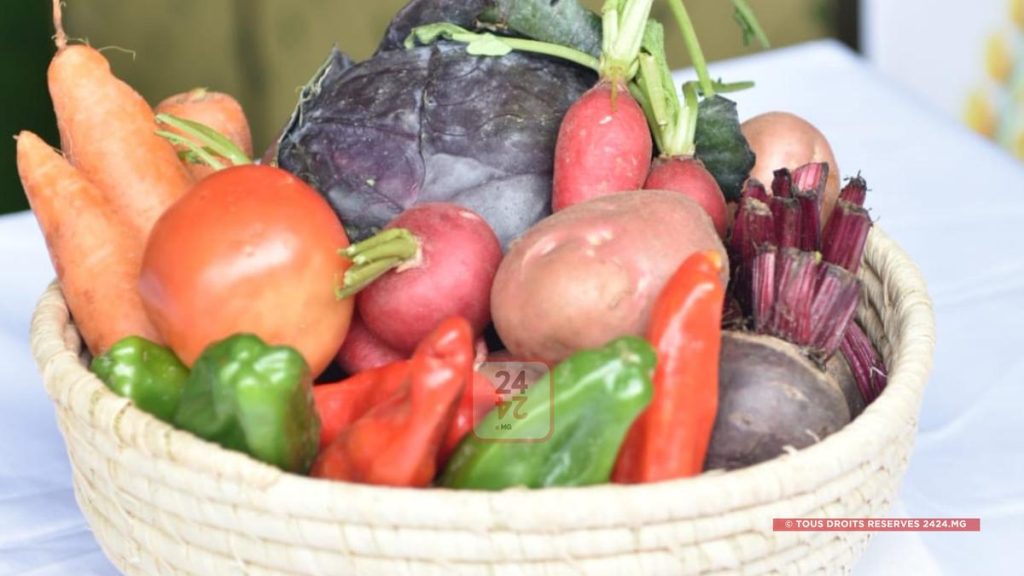
Rice, sometimes a few vegetables, but too little variety. In Madagascar, 77% of children under five face “food poverty,” even though the country possesses significant agricultural and natural resources. This finding was highlighted during the International Fair for Agriculture, Livestock, and Fisheries. According to the Ministry of Agriculture and Food Sovereignty, the problem is not limited to the quantity of food available, but concerns the diversity of foods consumed daily.
On average, the plates of young Malagasy children contain only two food groups. Rice or other starches occupy a central place, while vegetables, animal proteins, and other nutritious foods remain less present. Green vegetables, milk, and especially fish are among the foods still rarely consumed.
This situation directly impacts the quality of children’s diets and their nutritional needs. The paradox is striking: Madagascar has agricultural land, fishery resources, and significant biodiversity, but this wealth is not necessarily reflected on the dinner plate.
Difficulties in access, dietary habits, and the production and consumption capacities of households contribute to limiting this diversity. Faced with this reality, Madagascar has adopted a national roadmap to transform its food system. It plans to bring together several sectors, including agriculture, environment, energy, and the private sector.
The challenge is to evolve the food system as a whole to better combat malnutrition while strengthening resilience to climate change. Because producing more is not enough; this food wealth must truly benefit children’s plates.
Captured & Published at: 2026-09-13 13:53:35 (Madagascar Local Time EAT)
Original Source: https://www.2424.mg/nutrition-77-des-enfants-malgaches-nont-pas-une-alimentation-suffisamment-diversifiee-selon-le-ministere-de-lagriculture-et-de-la-souverainete-alimentaire/